

Vegetable-tanned or chrome-tanned? What’s the real difference, which one to choose for your project, what Crazy Horse really is, and two simple tests to tell them apart.
Vegetable-tanned leather (veg-tan)
Vegetable-tanned leather comes in three main forms: natural (undyed), dyed at the factory, and with a finish (coating). Natural vegetable-tanned leather is like a blank page: with leather dyes and a finishing coat you can make it any color you want.
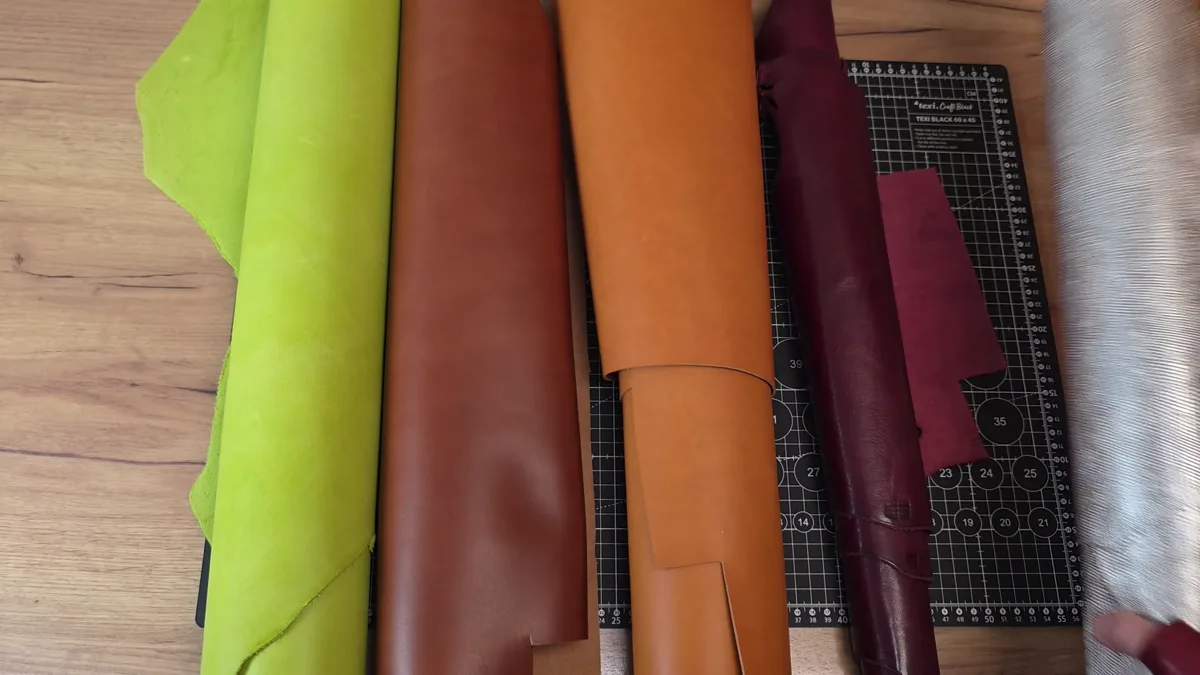
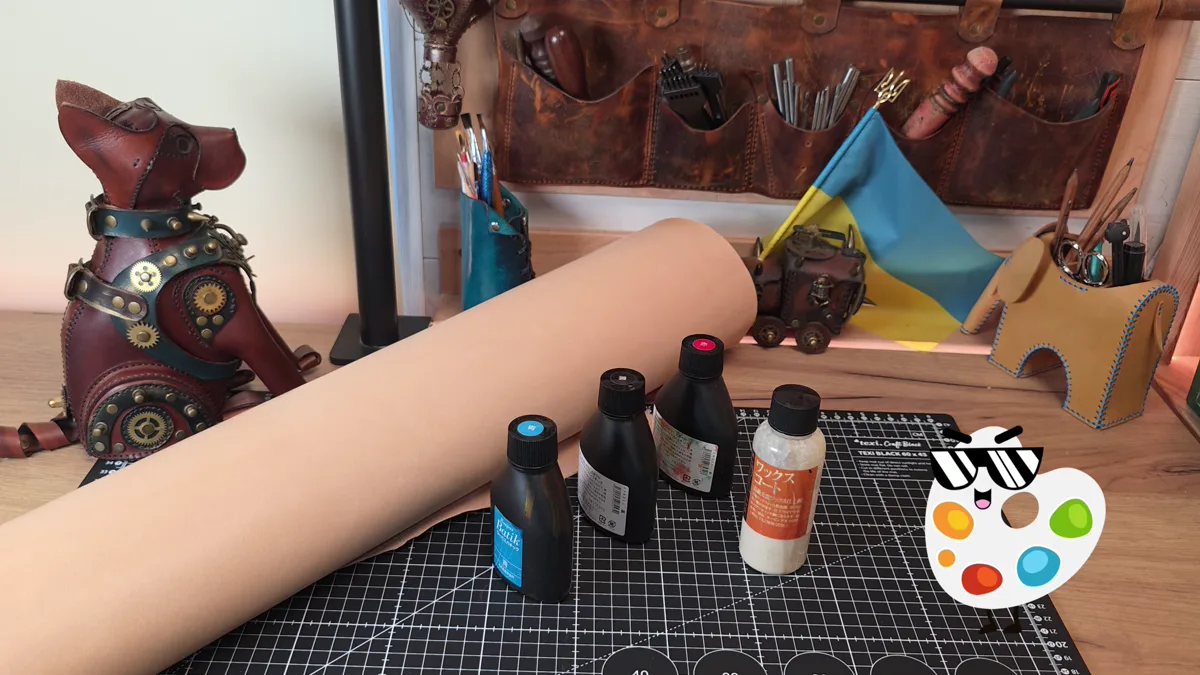
Uncoated vegetable-tanned leather absorbs water quite well, so at the final stage it needs a finish to protect it from water and dirt. Note that the leather darkens slightly after the finish.
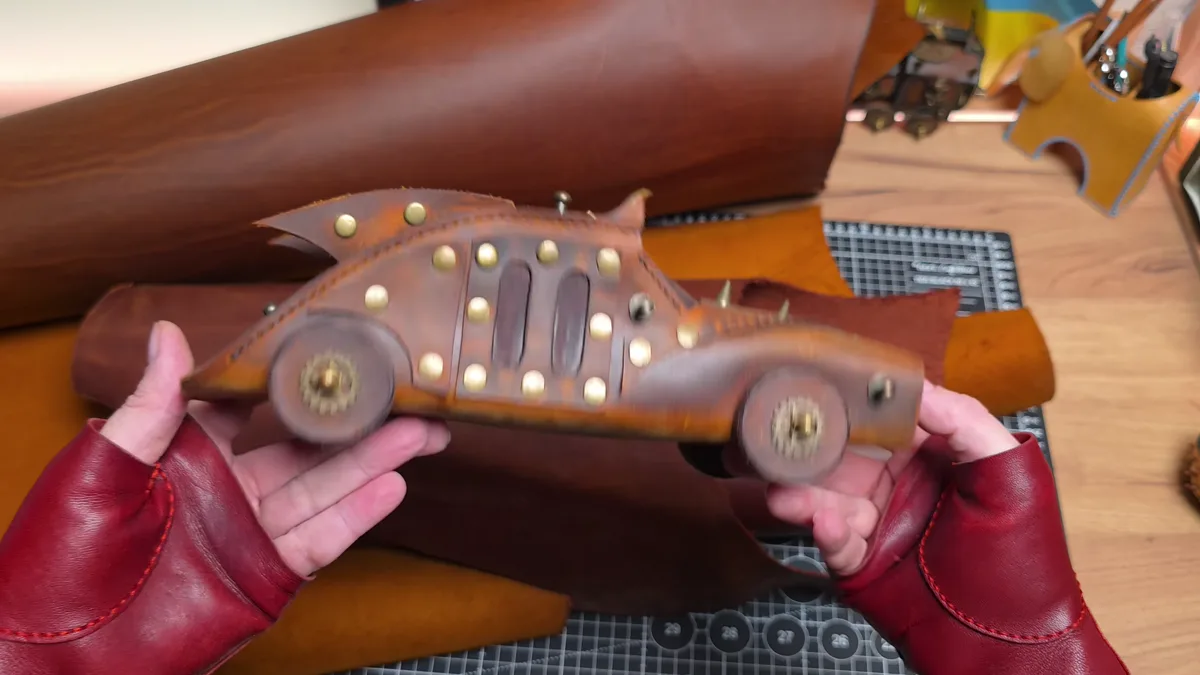
Most of my patterns are designed for vegetable-tanned leather, because it holds its shape. This dog-shaped bag is made from natural vegetable-tanned leather that I dyed myself, and the retro car from finished vegetable-tanned leather:


Chrome-tanned leather (chrome-tan)
Chrome-tanned leather doesn’t need all that work: it is good from the start. It comes in tons of colors and textures, and from the start it is not afraid of water or dirt. It is a stylish choice for bags.

Crazy Horse: not a horse at all
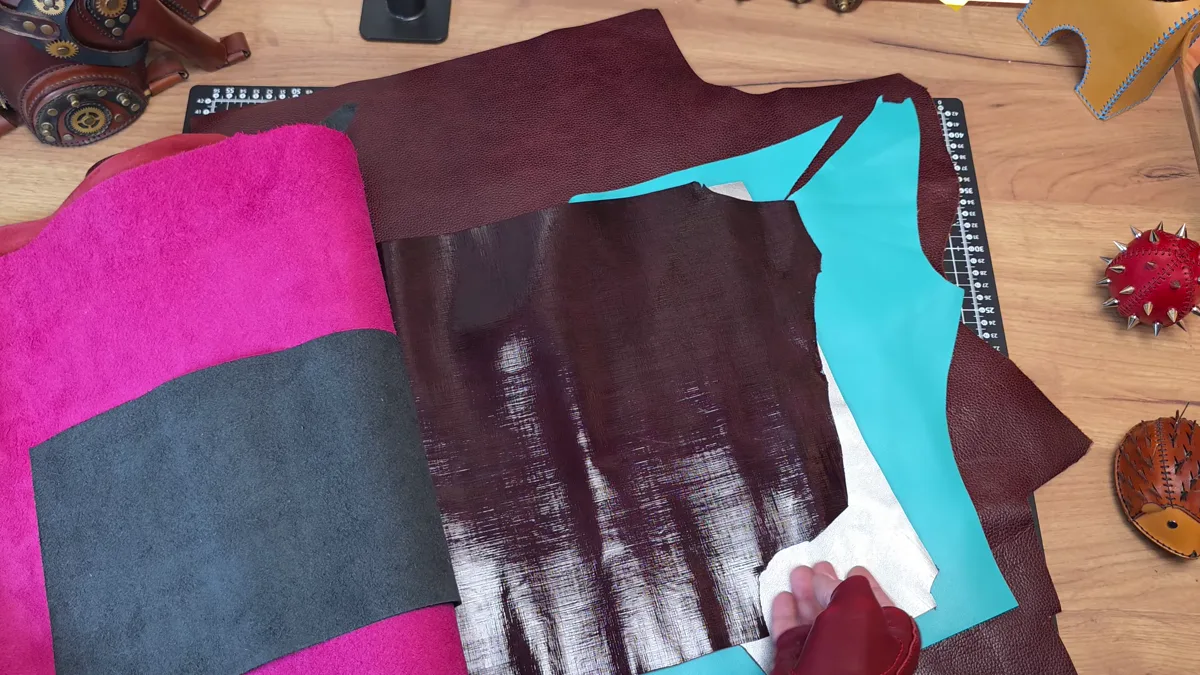
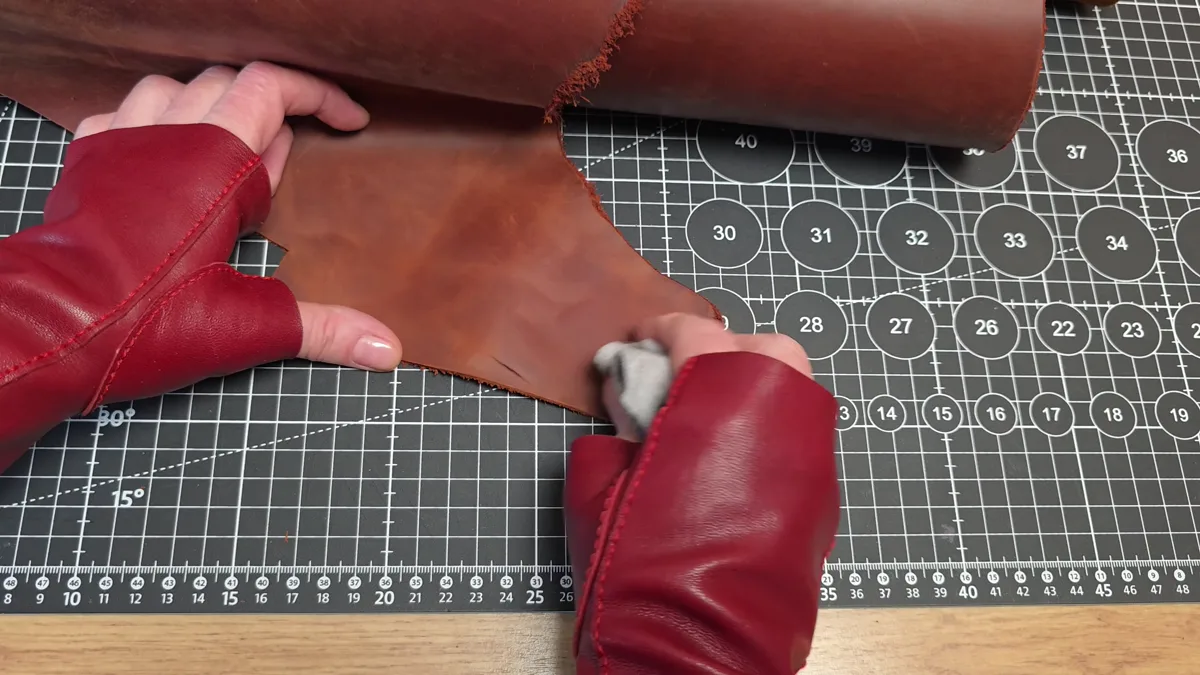
Crazy Horse is a crowd favorite, and 90% of it is chrome-tanned. It’s not horse leather, it’s a type of finish. Manufacturers wanted the effect of a worn saddle, so they took inexpensive chrome-tanned leather and infused it with high-melting waxes.
It scratches super easily, but that’s not a disaster at all: the heat from friction melts the wax, and the scratch disappears before your eyes, like Wolverine’s regeneration. That worn, vintage look is why I love it for steampunk models.

Why is vegetable-tanned leather more expensive?
Vegetable tanning is old school: the process can take months, and tannins from bark, roots and leaves do the work. You even know how tannins taste: strong tea, whiskey or barrel-aged wine, persimmon. That mouth-puckering astringency is tannins at work. We pay more for natural components and time.
Chrome tanning is a high-speed express: chrome salts, other modern chemicals and rotating drums do the same job in 1–2 days. It’s fast, efficient and cheaper.
Edges: water vs paint
Vegetable-tanned leather is so cool that its edge can be burnished with just water. It’s full of natural collagen: water plus friction, and the fibers bond together permanently. A bit of Tokonole makes the edge perfect.
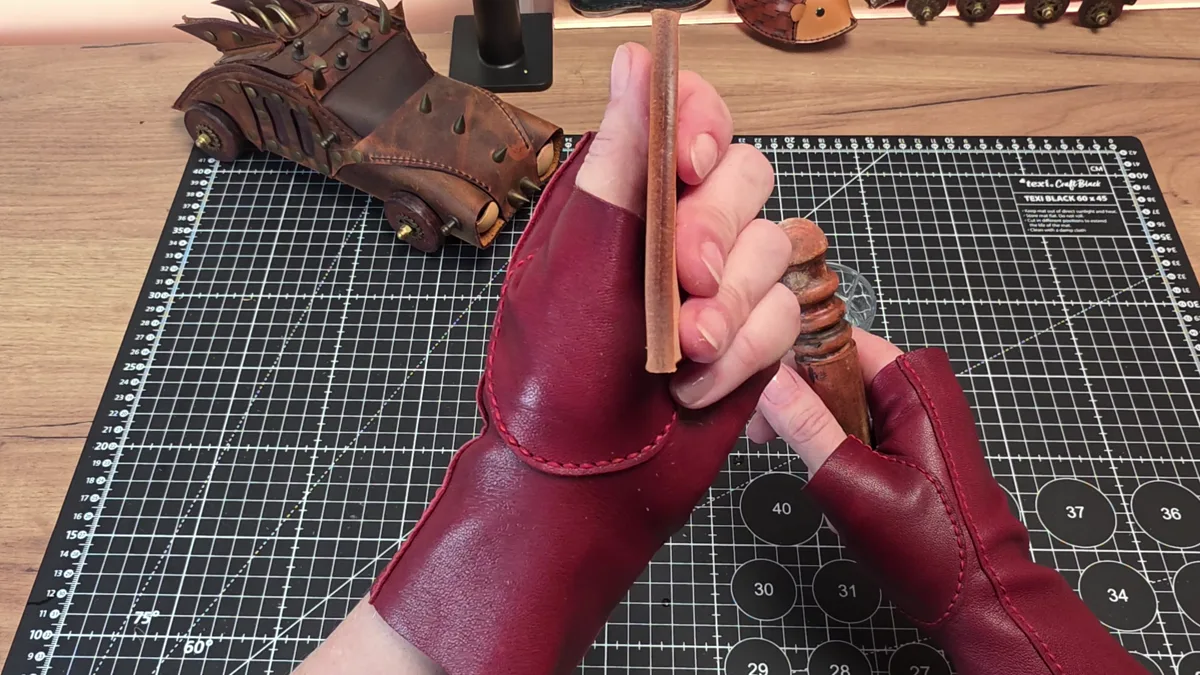
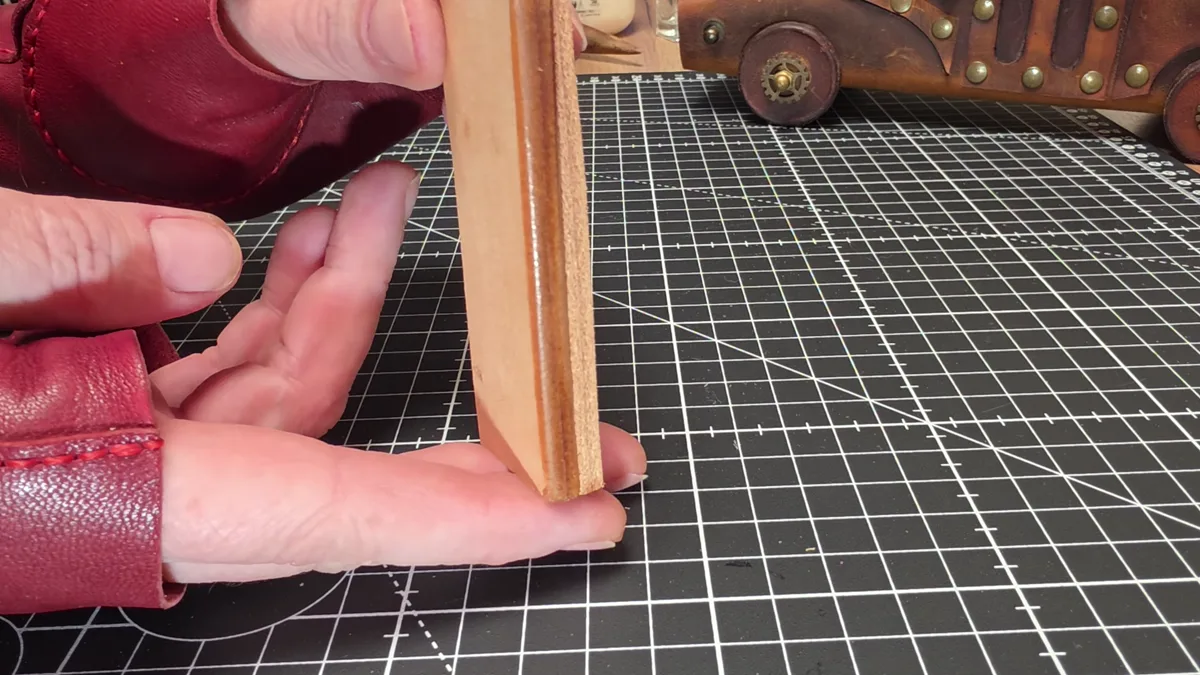
With chrome-tanned leather it’s not that simple: you need dyes, primers, tools, more time and effort. See the edge tools in my beginner tools guide.
Shaping and stamping
See how voluminous the whisker pads are on this kitty? Just one detail changes the whole look, and it’s possible because it’s vegetable-tanned leather: vegetable-tanned leather can be molded and holds its shape.
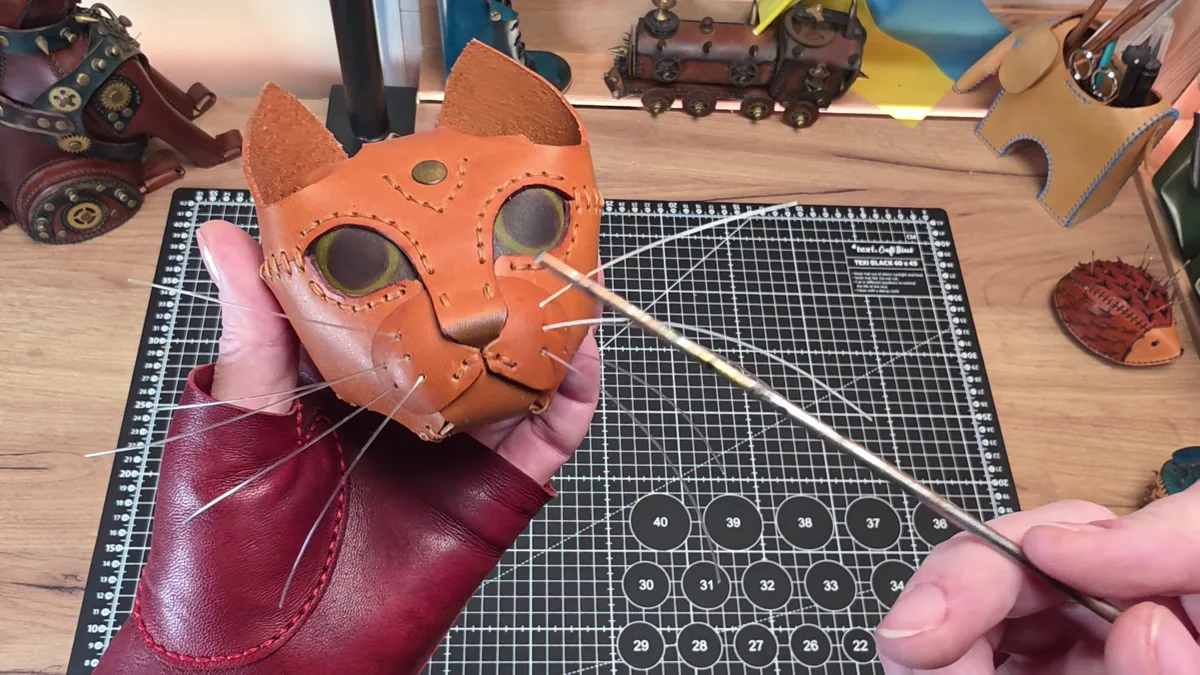
Because vegetable-tanned leather is so easy to shape, it is also easy to stamp. Chrome-tanned leather needs hot stamping; some masters do it very well, I’m just not one of them.
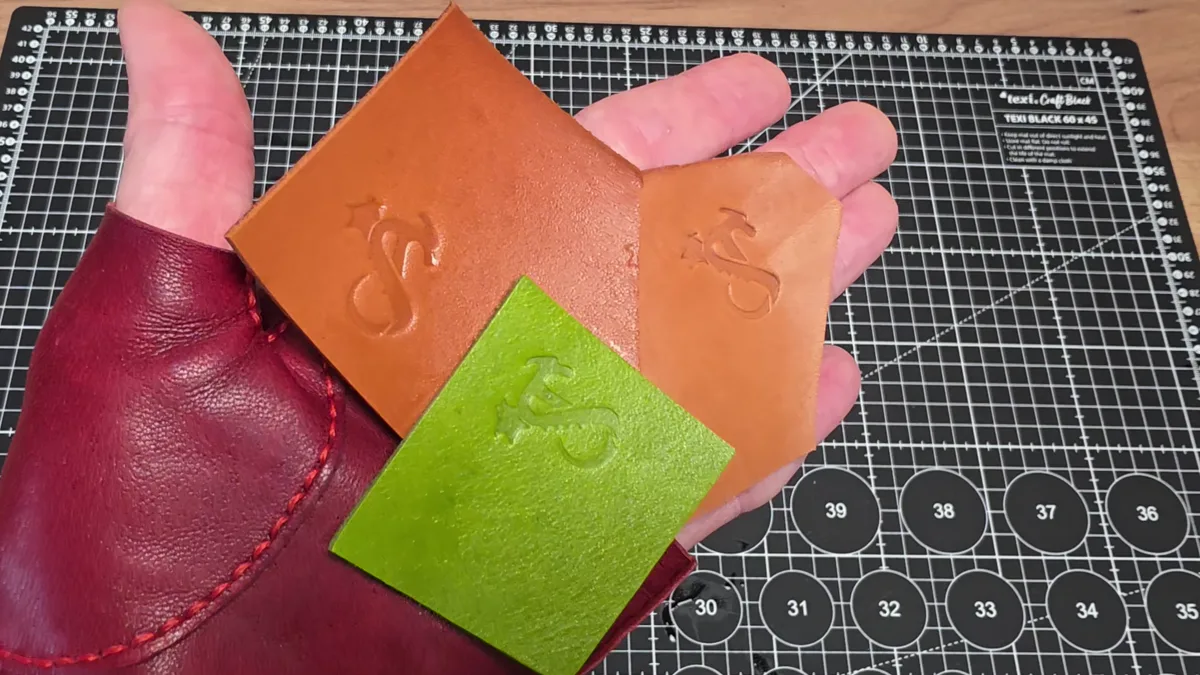
How to tell vegetable-tanned leather from chrome-tanned leather
By the look, they can be very similar. The simplest way: ask the seller. But if you found a piece of leather in your attic and don’t know what it is, there is a quick look at the edge, and if that’s still not clear, the boiling water test.
- You need boiling water, not just hot.
- Drop narrow strips of the leather into it.
- Vegetable-tanned leather curls up and stiffens: it feels just like tree bark. Chrome-tanned leather doesn’t curl.
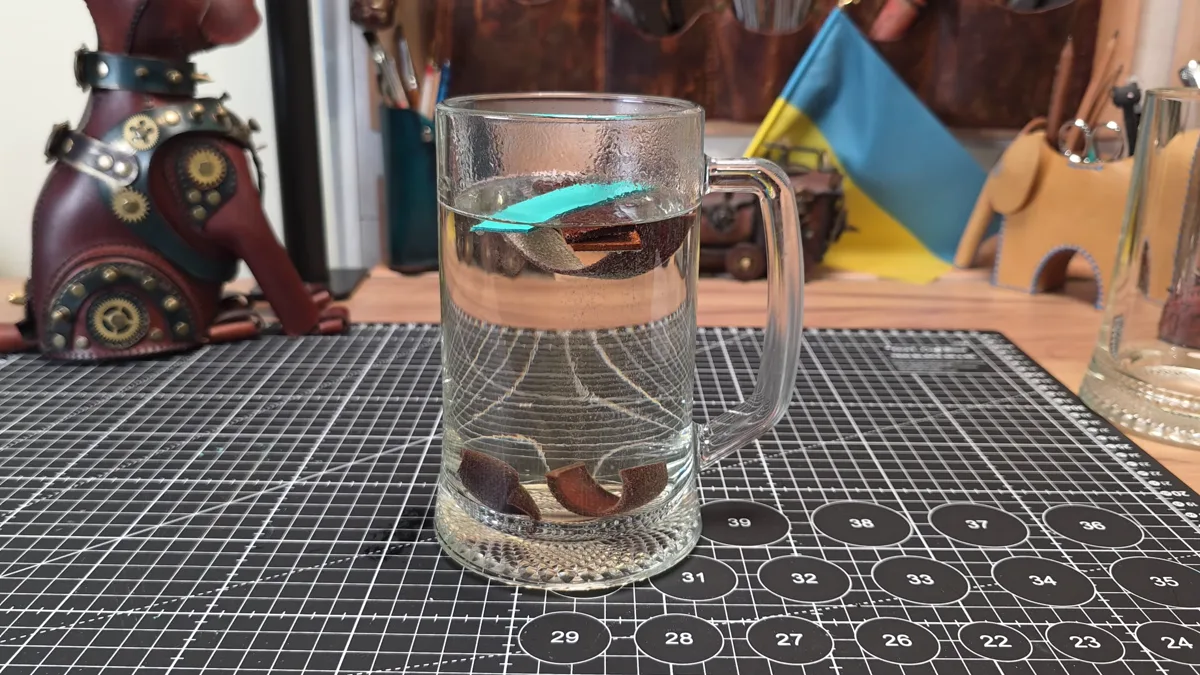
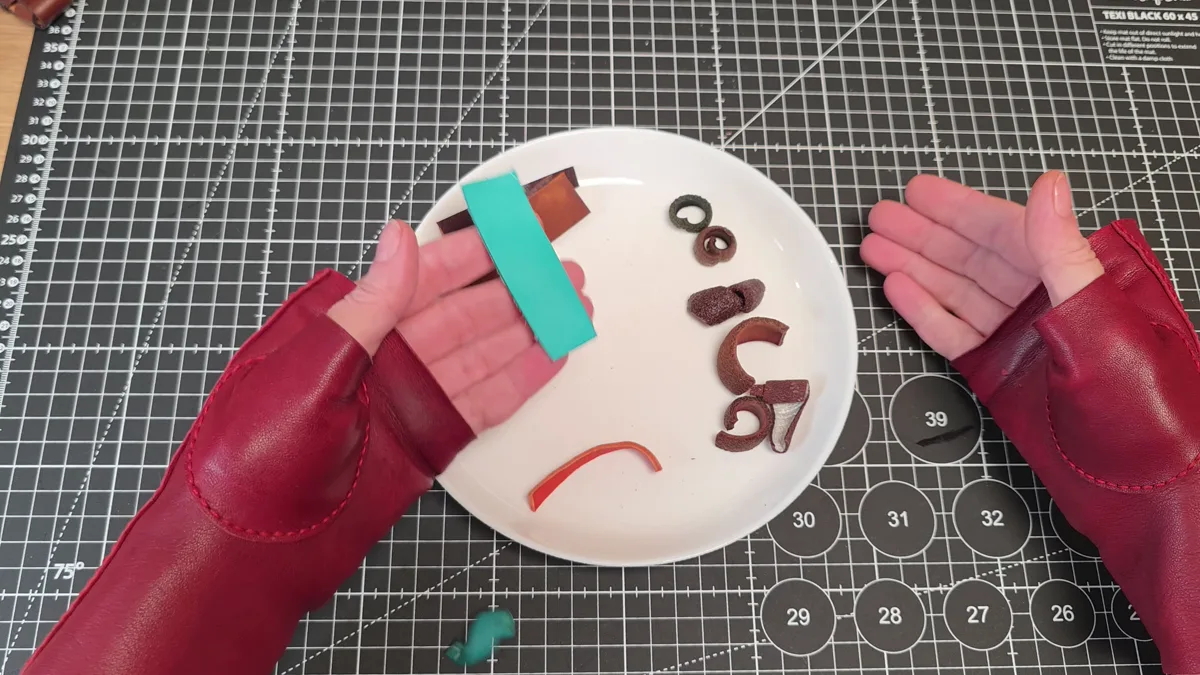
In my test one piece curled up but stayed soft. There are more tanning methods than veg and chrome (for example synthetic tanning), so not every leather fits neatly into one of the two groups.
Vegetable-tanned vs chrome-tanned leather at a glance
| Vegetable-tanned | Natural tannins, takes months, more expensive Holds its shape, can be molded and stamped easily Edges burnish with water Natural vegetable-tanned leather can be dyed any color, needs a finish against water and dirt |
|---|---|
| Chrome-tanned | Chrome salts, 1–2 days, cheaper Many colors and textures from the start Not afraid of water or dirt Edges need primer and edge paint; stamping needs heat |
| Crazy Horse | Mostly chrome-tanned leather with wax, worn vintage look Scratches easily, but rubbing makes scratches disappear |
Which leather and thickness for my patterns
Each pattern page lists the exact leather and thickness. As a quick guide:
- Keychains: 1.4–2 mm (3.5–5 oz); scraps are perfect.
- Boxes, organizers and steampunk models: 1.4–2 mm vegetable-tanned leather or Crazy Horse; wheels 2 mm or thicker.
- Bags: usually 1.4–2 mm; the pattern page says exactly.
- Fingerless gloves: soft, stretchy leather 0.5–0.8 mm.
What about vegan leather?
I haven’t worked with vegan leather myself, but some customers have used it successfully with my patterns. Choose the same density and stiffness as the leather listed in the pattern description.
Browse animal patterns, steampunk patterns or all patterns; every one comes with a video tutorial.
FAQ
What is the difference between vegetable-tanned leather and chrome-tanned leather?
Vegetable-tanned leather is tanned with natural tannins over months; it is firmer, holds its shape, molds and stamps easily, and its edges burnish with water. Chrome-tanned leather is tanned with chrome salts in 1–2 days: it is cheaper, comes in many colors and resists water and dirt from the start.
Which is better for beginners?
For most of my patterns, vegetable-tanned leather: it holds the shape of boxes and figures and its edges are easy to finish. For bags, chrome-tanned leather works well too.
Is Crazy Horse leather horse leather?
No. Crazy Horse is a finish: usually chrome-tanned leather infused with wax for a worn, vintage look.
How can I tell if leather is vegetable-tanned leather or chrome-tanned leather?
Ask the seller, look at the edge, or do the boiling water test: vegetable-tanned leather curls and stiffens, chrome-tanned leather doesn’t.
Does vegetable-tanned leather need a finish?
Uncoated vegetable-tanned leather absorbs water, so a finish protects it from water and dirt. It will darken slightly.
hello world
hello world
buy iphone duo with warranty