

These are the knives I have cut leather with for many years. I hope this comparison helps you choose your first knife for cutting leather, or your next one.
Which knives I use for leather
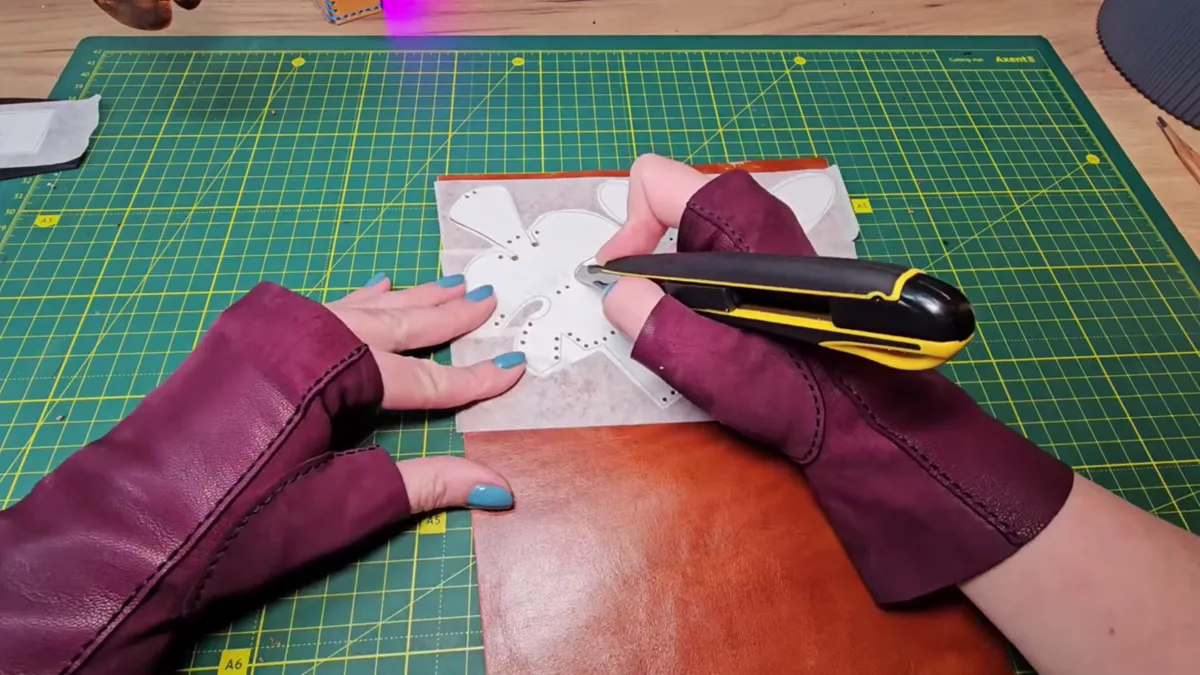
I work with segmented blade knives. Some call them utility knives, some call them craft knives, and many know them as snap-off knives: when the tip gets dull, you break off one segment and keep cutting with a fresh one.
I also have fixed-blade saddler knives. I got them only a few days before filming and have not worked with them yet, so they are a topic for another video. I just had to show them, because they are beauties.
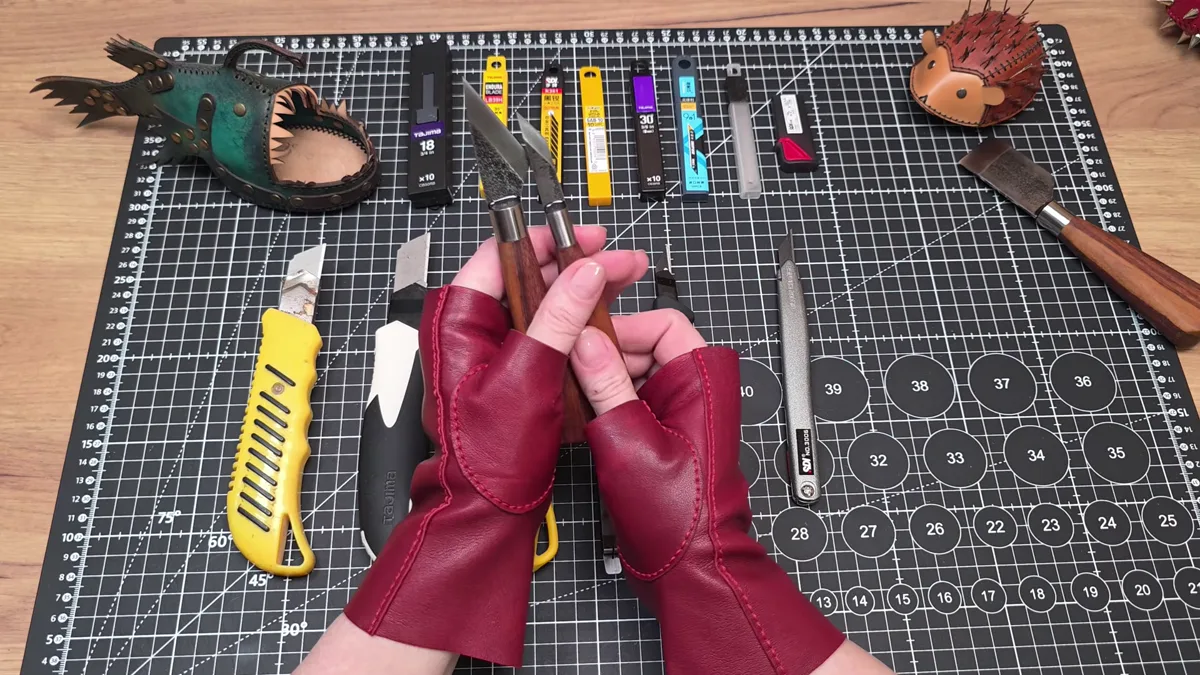
The knife I would not advise: a no-name knife from a hardware store
I worked with knives like this for several years. When I started, a long time ago, there were no better knives in our country, so I got used to them and had no problems. But when I began designing leather patterns, it was time to change the knives too.
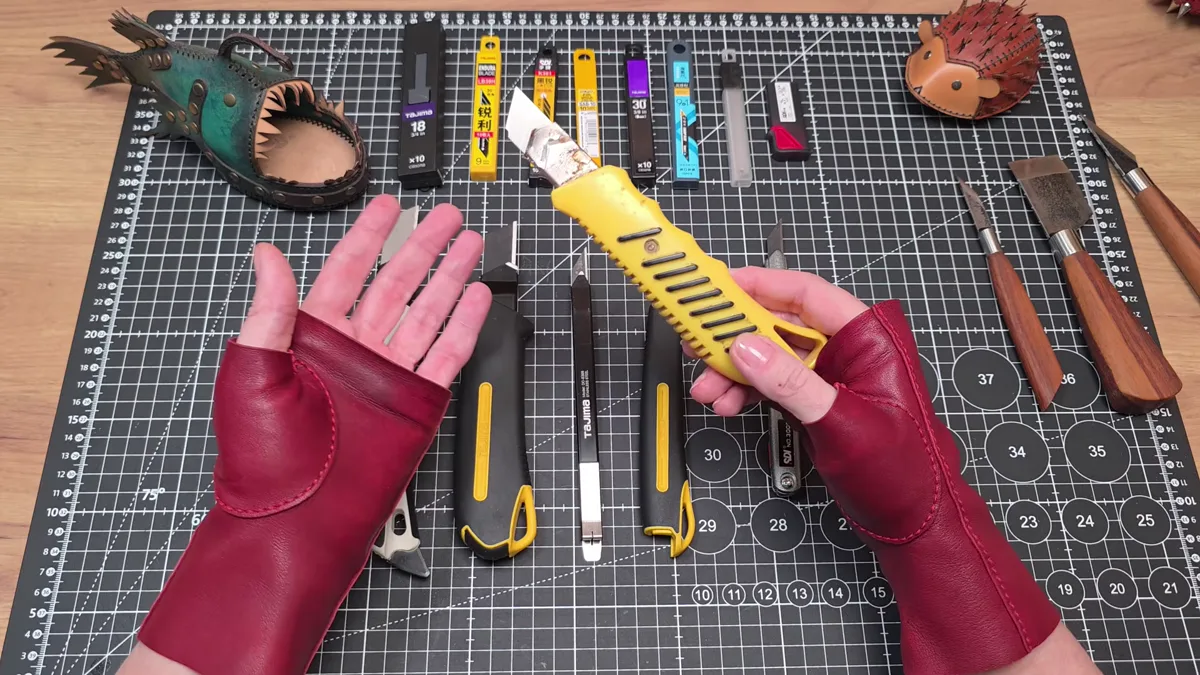
Why I chose Tajima
I was choosing between Tajima and Olfa, and in the end I bought Tajima: four knives at once. Two have 18 mm blades, and two have 9 mm blades for intricate and curved cutting. They are more than four years old now, and nothing has happened to them. Only the end caps are missing, because my cat Ciel steals them.
Tajima Driver Cutter 18 mm
Ergonomically this knife became my favorite at once. Part of the handle has a coating that is very pleasant to the touch, and the rest is good plastic. But the main thing is not the coating, it is the thickness of the knife: it fits my hand perfectly and lets me get the job done more easily.
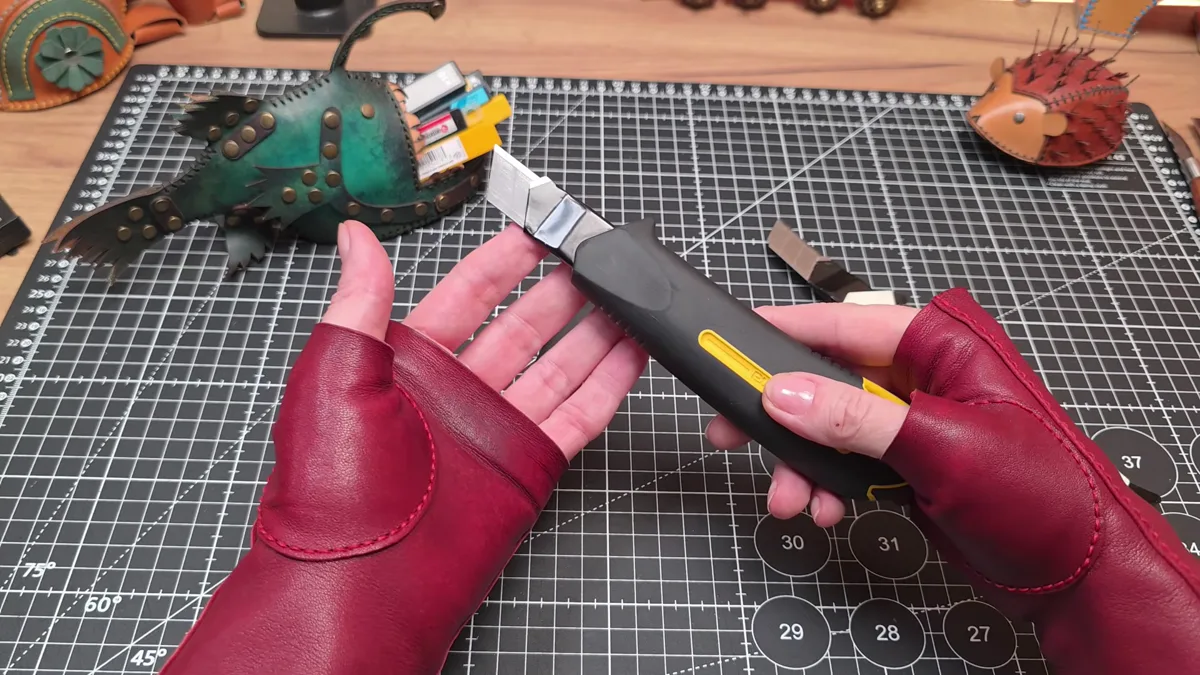
Tajima Fin Cutter 18 mm
With this one I still need to figure out where to place my finger, because it is too thin for my hand.
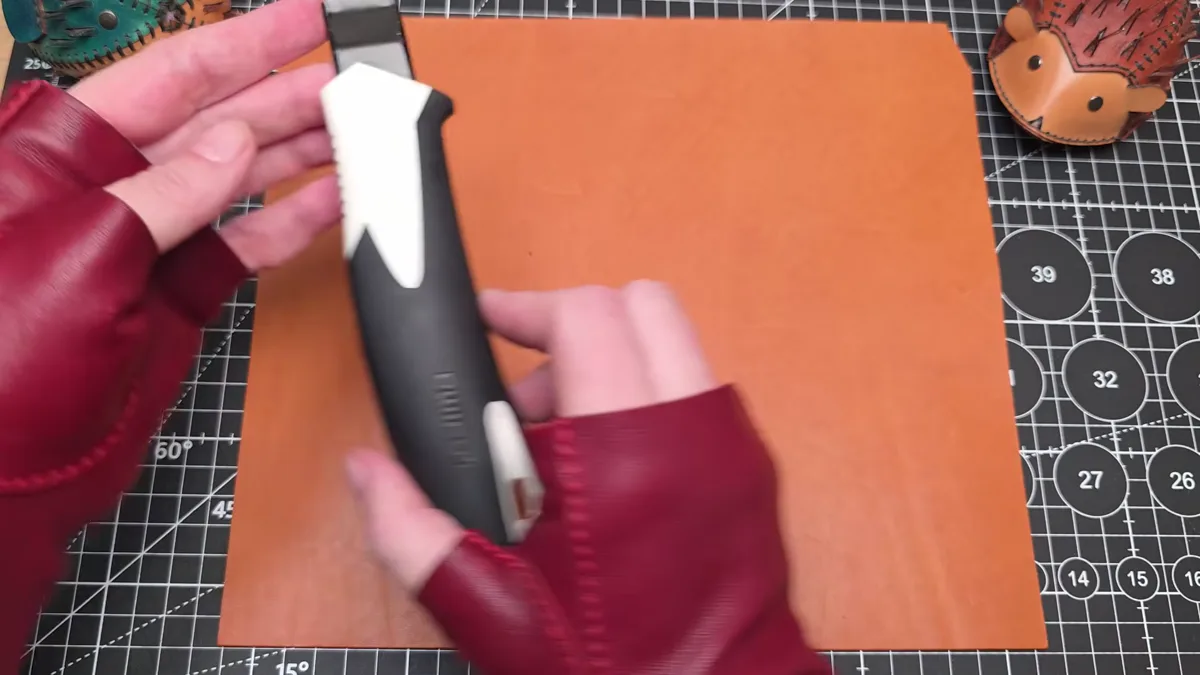
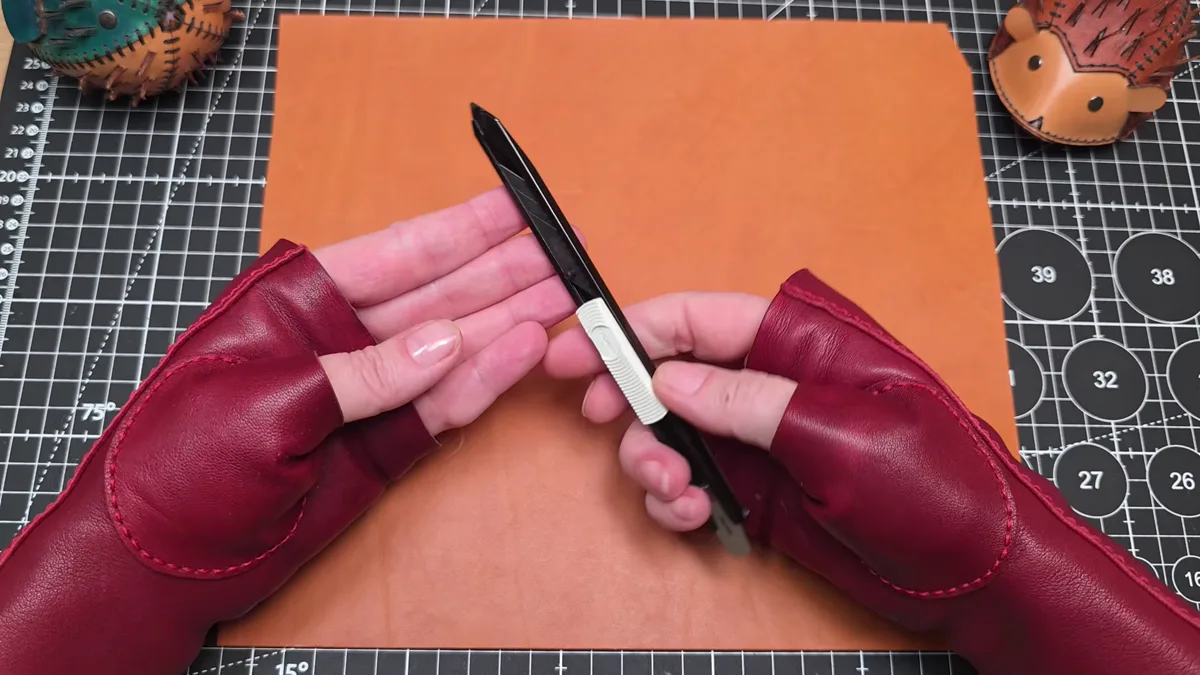
Tajima Graphic Knife 9 mm
This knife takes the top spot for being uncomfortable. Maybe it is fine for thin paper or film, but leather needs more effort, and you end up pressing your finger into the knife while you work. Because of its shape it is uncomfortable to hold. It is simple and inexpensive, but I do not recommend it for leather.
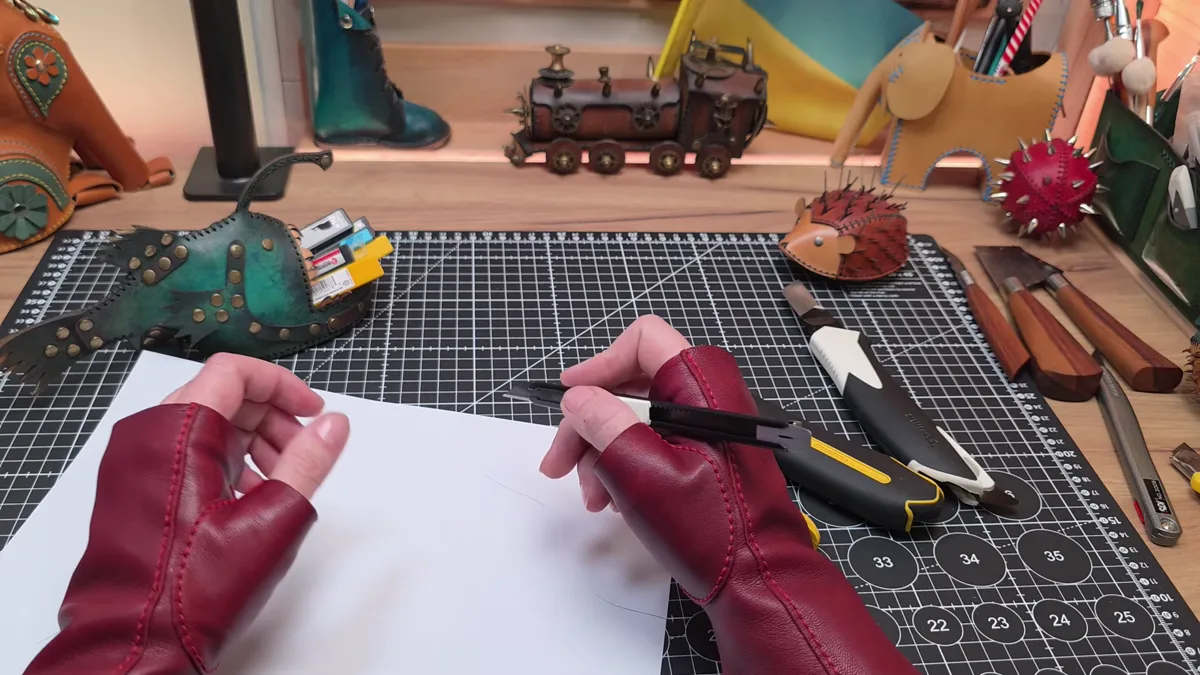
Tajima Driver Cutter 9 mm
This one fits my hand like a glove, as if it was made just for me. It is the same series as the 18 mm Driver Cutter, so it is no surprise that these two knives are my favorites.
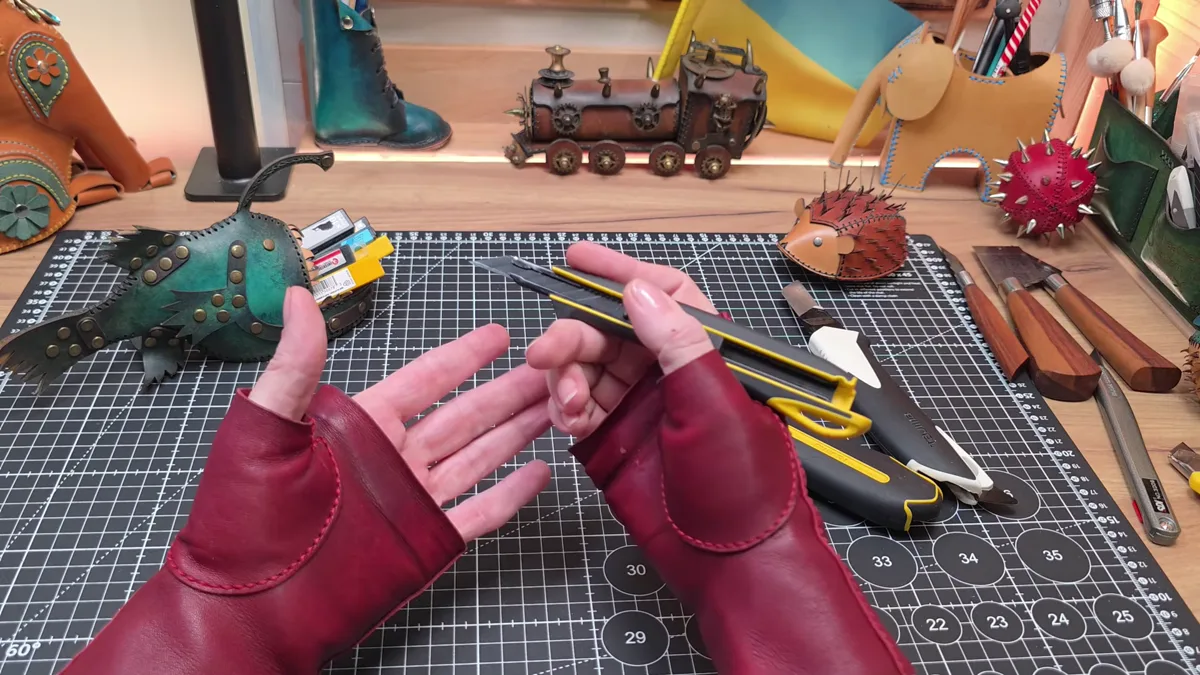
Ergonomics are a very individual thing. Everyone’s hands are different, so the knife that does not suit me might be just the one for you.
SDI precision knife 9 mm: my pick for beginners
This knife is new in my workshop. Its design is radically different from the knives we know. Classic segmented knives do not hold the blade rigidly, so the blade has a little play. In the SDI knife there is absolutely no wiggle. Honestly, the wiggle never bothered me much, but it is definitely a plus that the blade locks so securely.
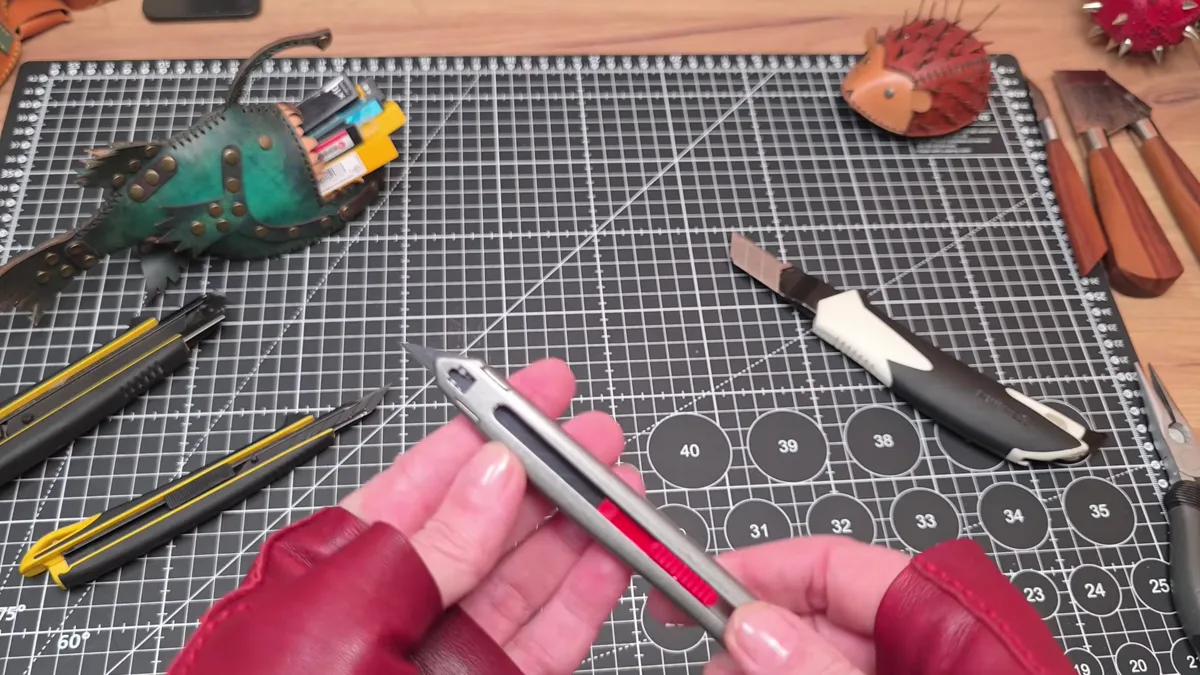
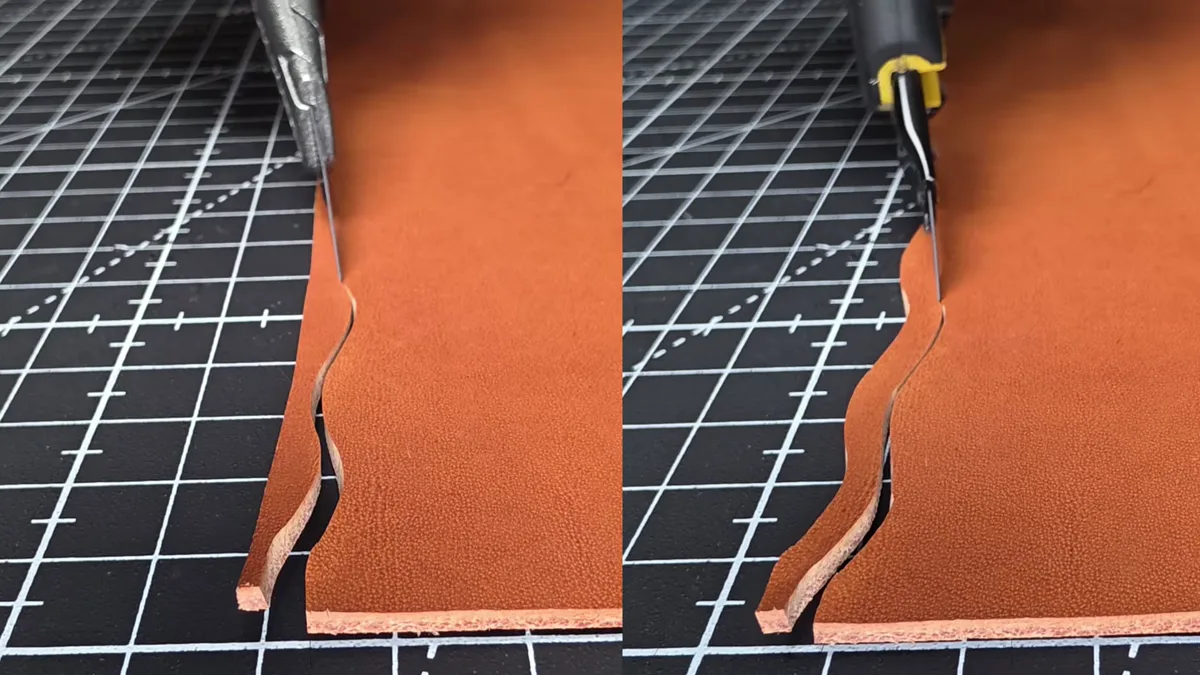
What I liked even more is how simple it is to replace the blade. And there are no end caps that always disappear somewhere. Ergonomically it would be perfect if it had the same coating as the Tajima Driver Cutter.
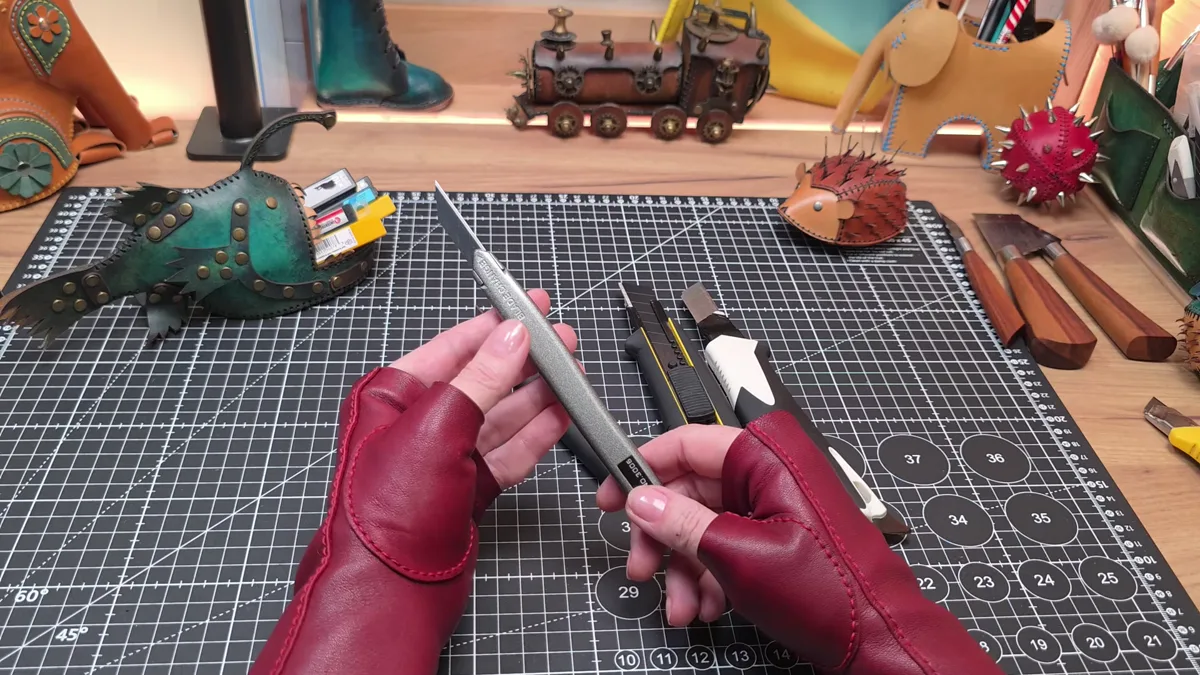
I can recommend it for beginners. It is the most budget-friendly option, because the set comes with blades and a special container for used blades. That container is not convenient for me, though: I still snap off the segments with pliers and then drop them into the container.
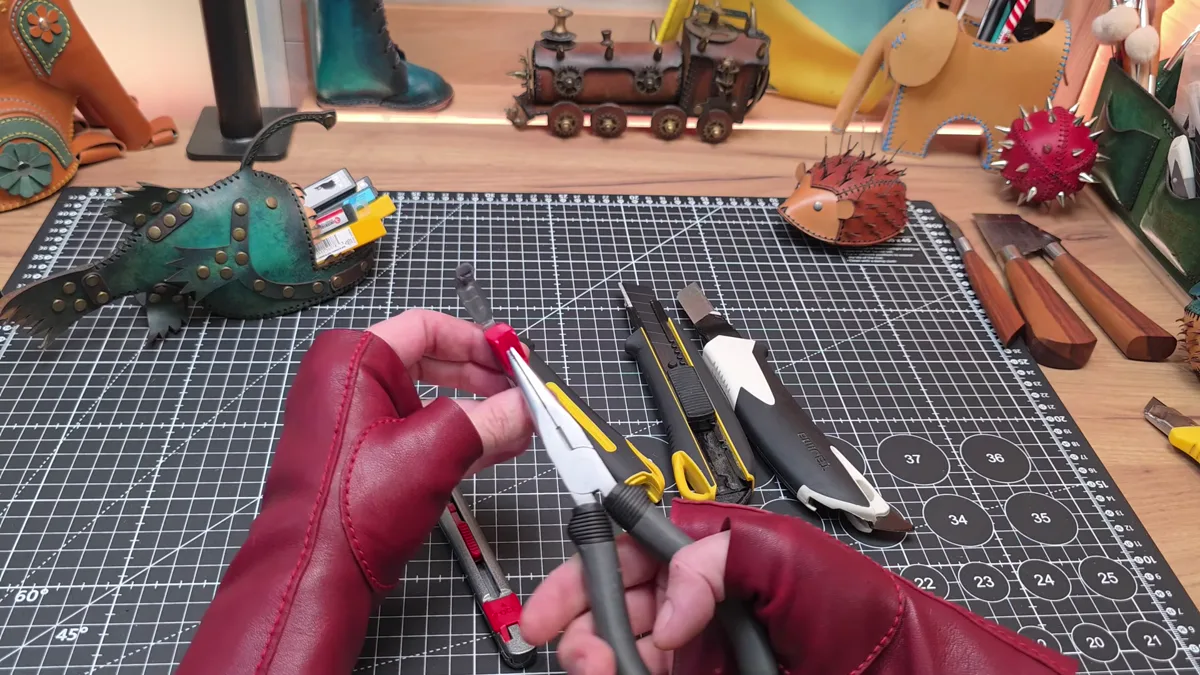
Knives compared
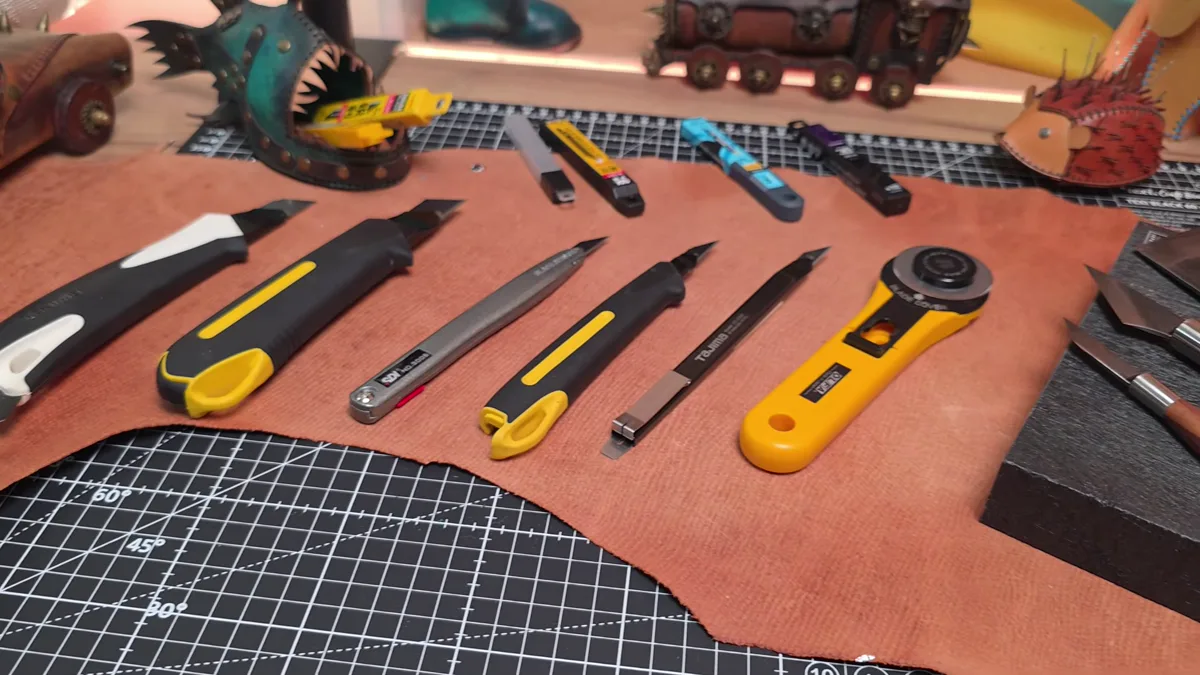
| Tajima Driver Cutter DC560YB, 18 mm | My favorite. Fits my hand perfectly. |
|---|---|
| Tajima Fin Cutter DFC560N, 18 mm | Too thin for my hand. |
| Tajima Graphic Knife DC390B, 9 mm | For paper and very thin materials. I do not recommend it for leather. |
| Tajima Driver Cutter DC360YB, 9 mm | My favorite for intricate and curved cutting. |
| SDI Precision Cutter 3006CA kit, 9 mm | No blade wiggle, easy blade replacement, comes with blades. My pick for beginners. |
| Olfa RTY-2/G rotary cutter, 45 mm | For straight, even cuts in thin, stretchy leather. I do not use it. |
Blades: 60° or 30°?
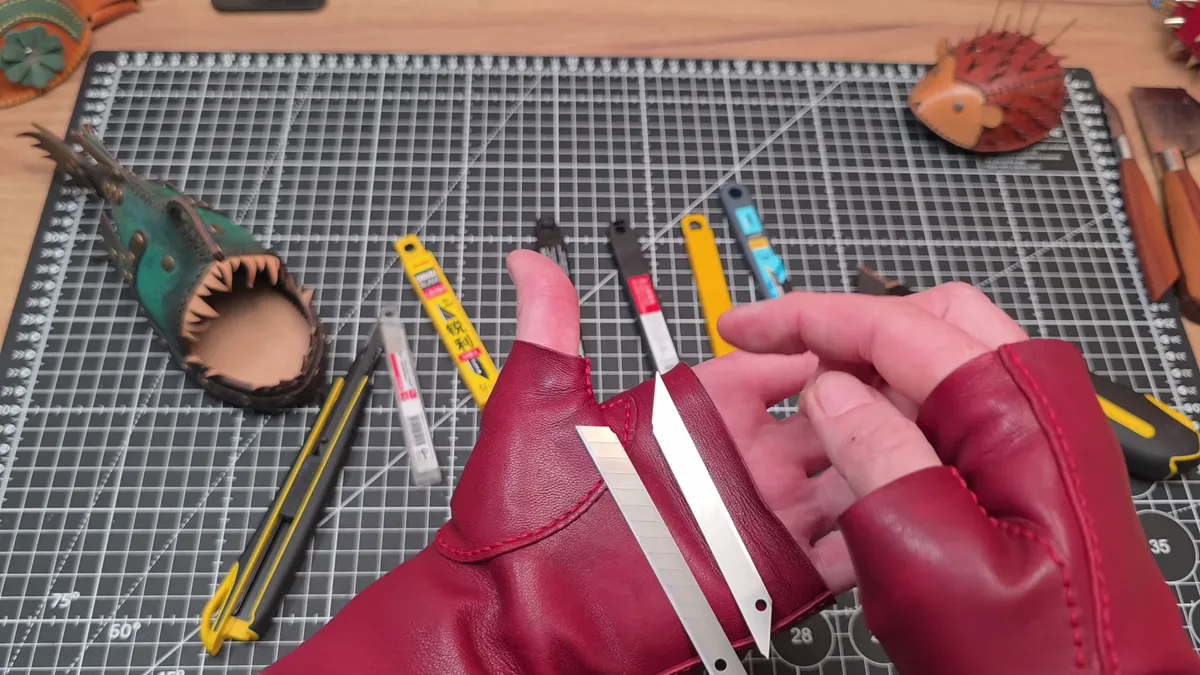
18 mm blades are the most standard ones and have a standard 60° angle. For leather I use Tajima blades.
9 mm blades come with two different angles: the standard 60° and a sharper 30°. I no longer use the 60° ones. All my 9 mm knives have 30° blades, because with a 30° angle you can cut much more precisely, whatever you want and however you want.
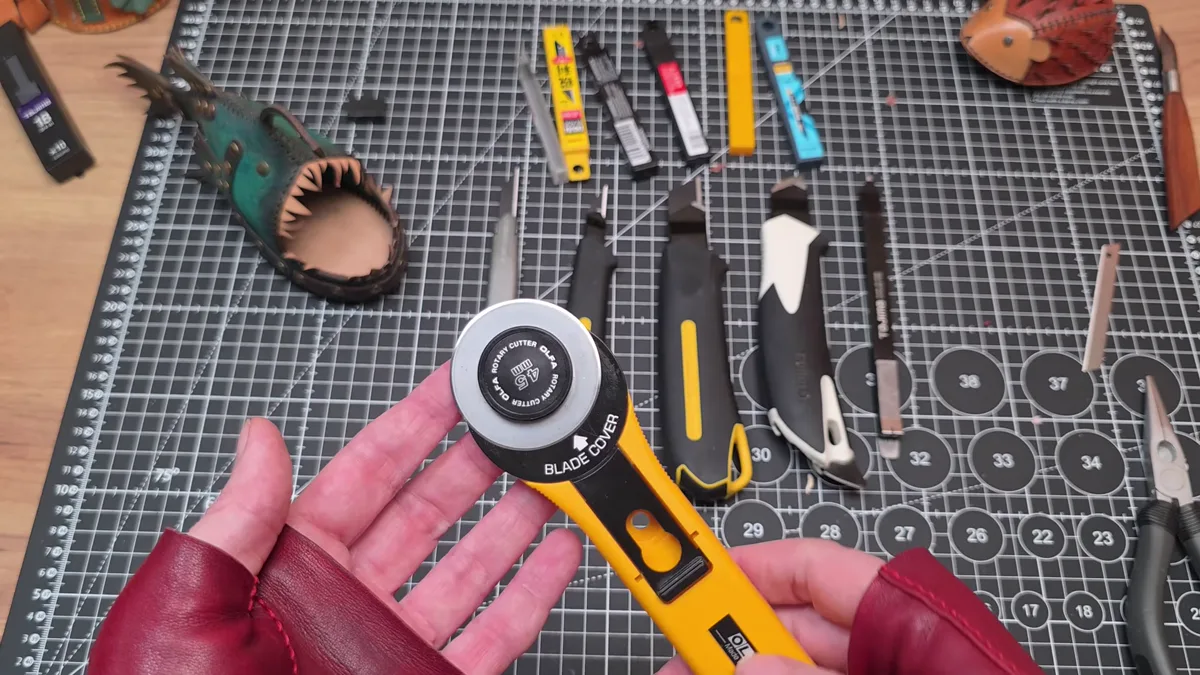
Olfa rotary cutter
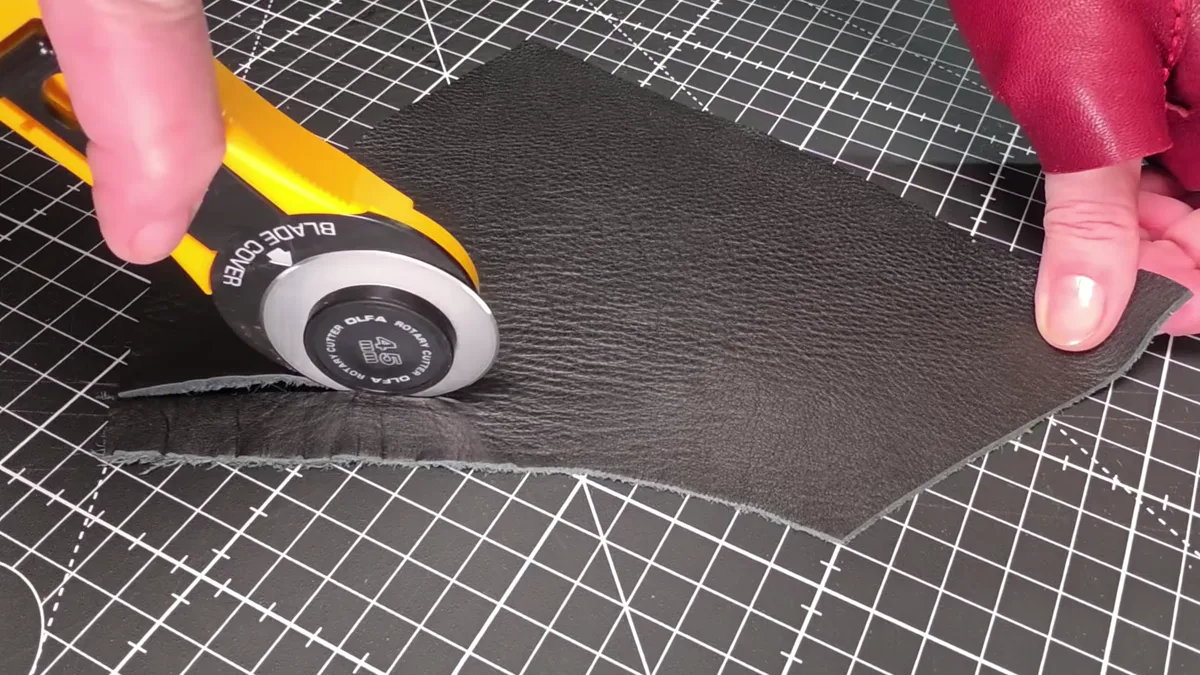
I have had an Olfa RTY-2/G rotary cutter with a 45 mm blade for a long time, but I forgot about it, because I do not use it. It cuts thin, stretchy leather wonderfully, because it does not drag the leather along. A rotary cutter is for cutting evenly and straight, and I have no problem doing that with a regular knife, so it ended up in my back drawer. I know people who work with rotary cutters and really like them. I am just not one of them.
My verdict
- My favorites: the two Tajima Driver Cutters, 18 mm and 9 mm.
- For beginners: the SDI precision knife set with 9 mm blades.
- Blades: 30° blades in every 9 mm knife.
- Skip: no-name knives from hardware stores and thin graphic knives.
This is not an advertisement: I bought all these knives and blades with my own money at different times.
More leatherworking tools
A knife is only one part of the kit. In my guide to leatherworking tools for beginners I show everything else you need and what it costs. When your knife is ready, pick a project in the pattern shop or watch the video tutorials.
A small project is the best way to get used to a new knife: try the leather cat keychain pattern or the leather bulldog keychain pattern, where a 9 mm knife with a 30° blade helps on the small curves.
FAQ
What is the best knife for cutting leather?
For me it is a snap-off utility knife that fits the hand well. My favorites are the Tajima Driver Cutters with 18 mm and 9 mm blades. Hands are different, so choose the knife that is comfortable for you.
Can I cut leather with a utility knife?
Yes. I have cut leather with segmented blade utility knives for many years and design all my patterns with them.
Which blade angle is better for leather, 30° or 60°?
For 9 mm knives I use only 30° blades: the sharper tip cuts much more precisely, especially on curves. 18 mm blades have the standard 60° angle.
Which knife is good for beginner leatherworkers?
I can recommend the SDI precision knife set with 9 mm blades. It is budget-friendly, the blade does not wiggle, and it comes with blades.
Do I need a rotary cutter for leather?
Not necessarily. It is good for straight cuts in thin, stretchy leather, but I cut straight lines with a regular knife and do not use mine.