

You shared many tips under my videos on how to get rid of burnt edges on laser-cut leather. I tested them all, and here is what really helps and what does nothing.
How I tested
I used 2 mm (5 oz) vegetable-tanned leather and a diode laser with 10 W optical power. Speed and power stayed the same in every test, so only the method changed. The results apply to any diode laser engraver. I assume the basic safety rules are followed: the laser is enclosed and the smoke goes outside.
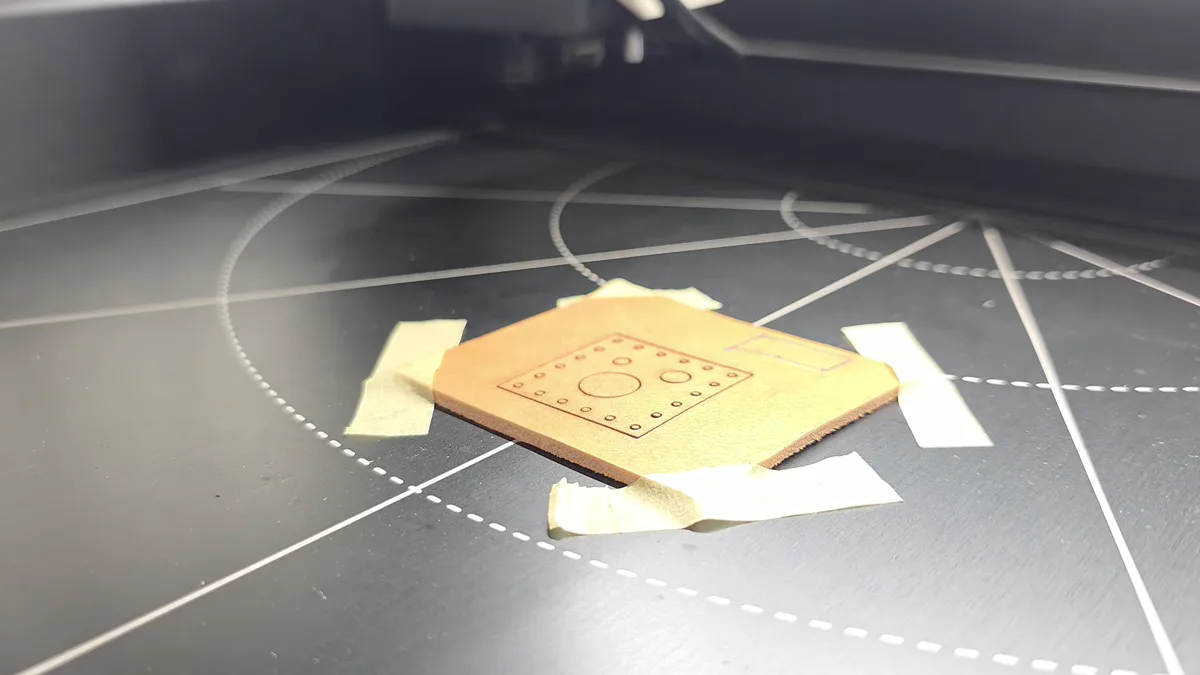
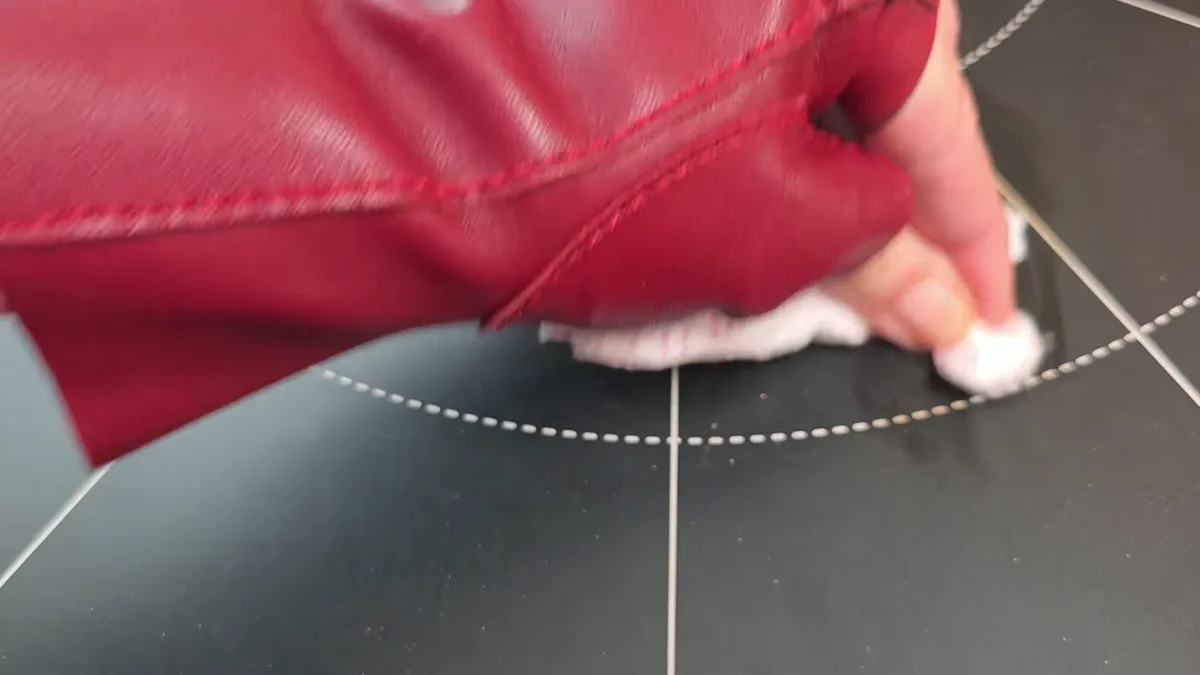
1. Do not cut leather on a solid surface
On a solid surface the smoke and soot have nowhere to go. They stay under the leather and stain it. It happens with any leather.
2. Raise the honeycomb grid
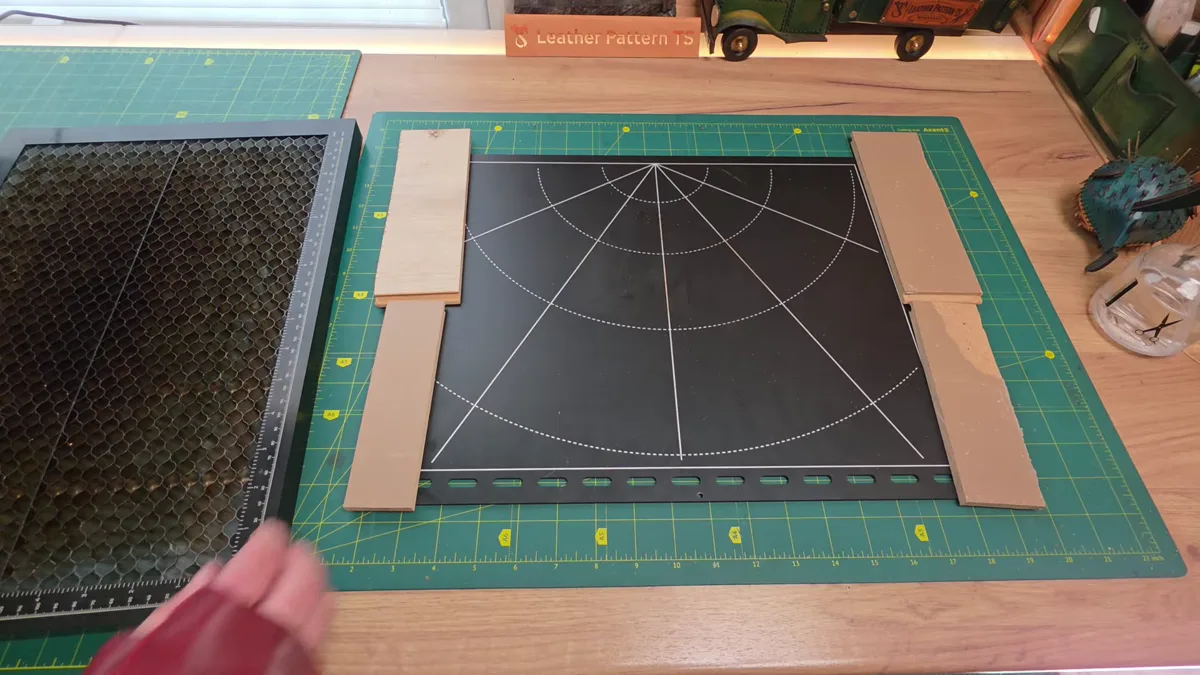
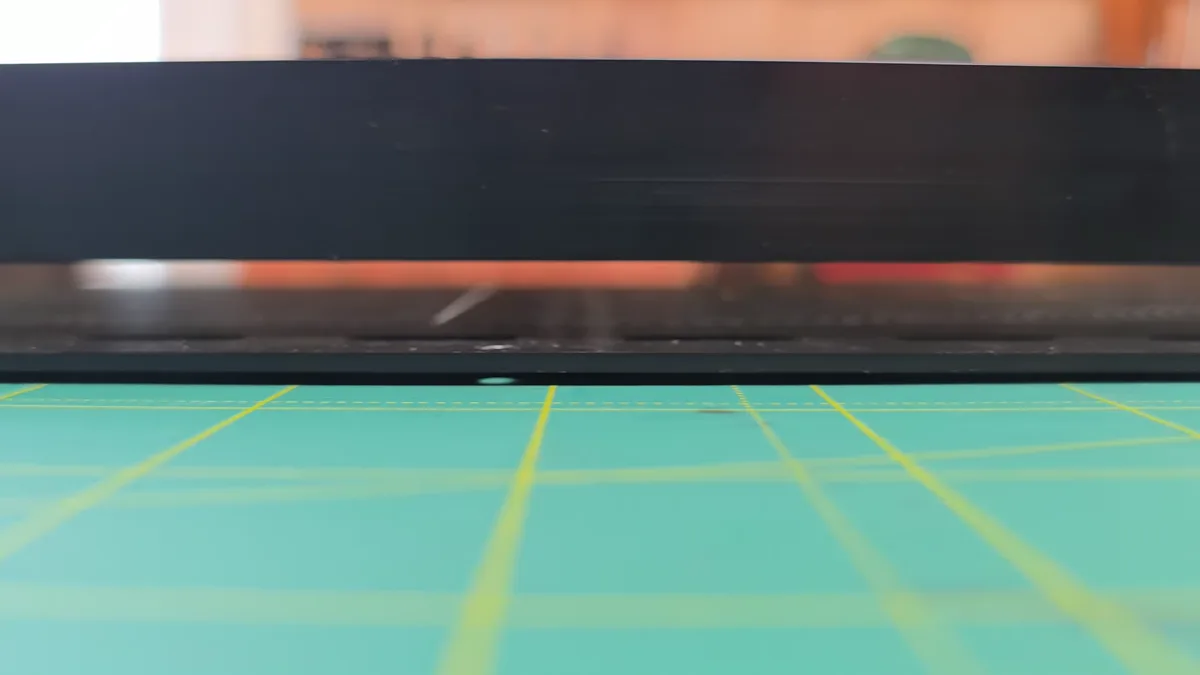
A honeycomb grid gives a much cleaner cut: the better the airflow, the less the leather suffers. But a grid lying flat on the table is not enough, because the smoke needs room to escape. Raise the grid a few centimeters above the table; the higher, the better. Some manufacturers sell a stand for this, but it is easy to make one yourself.
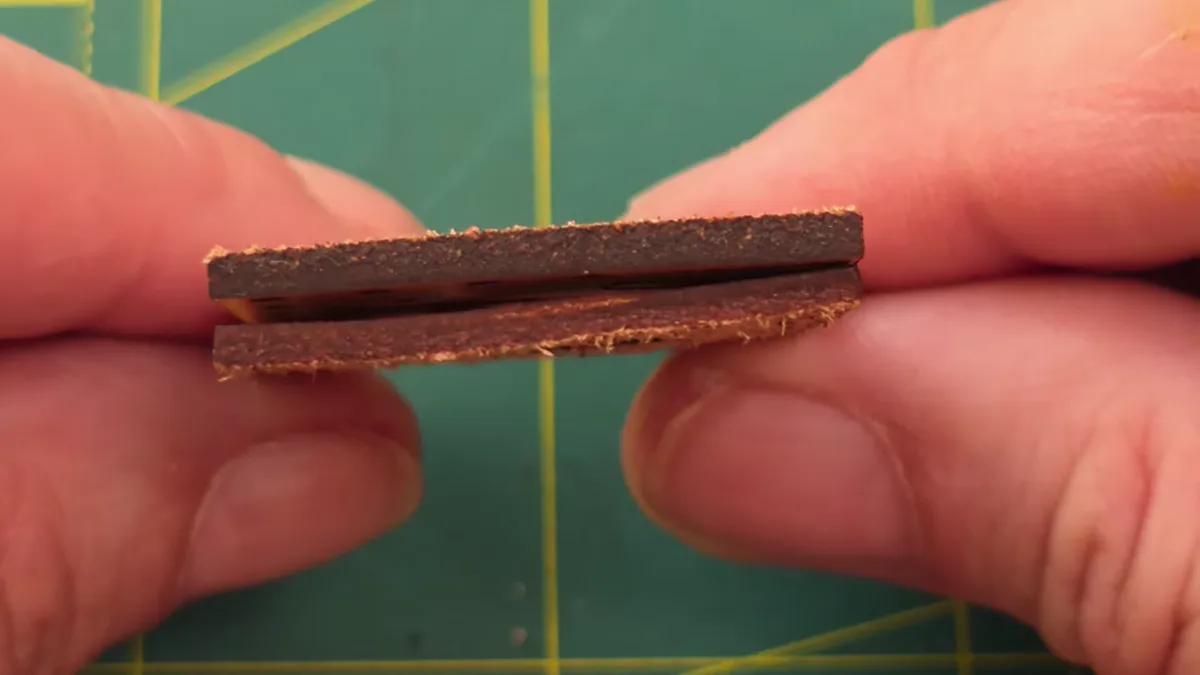
3. Use a laser air pump
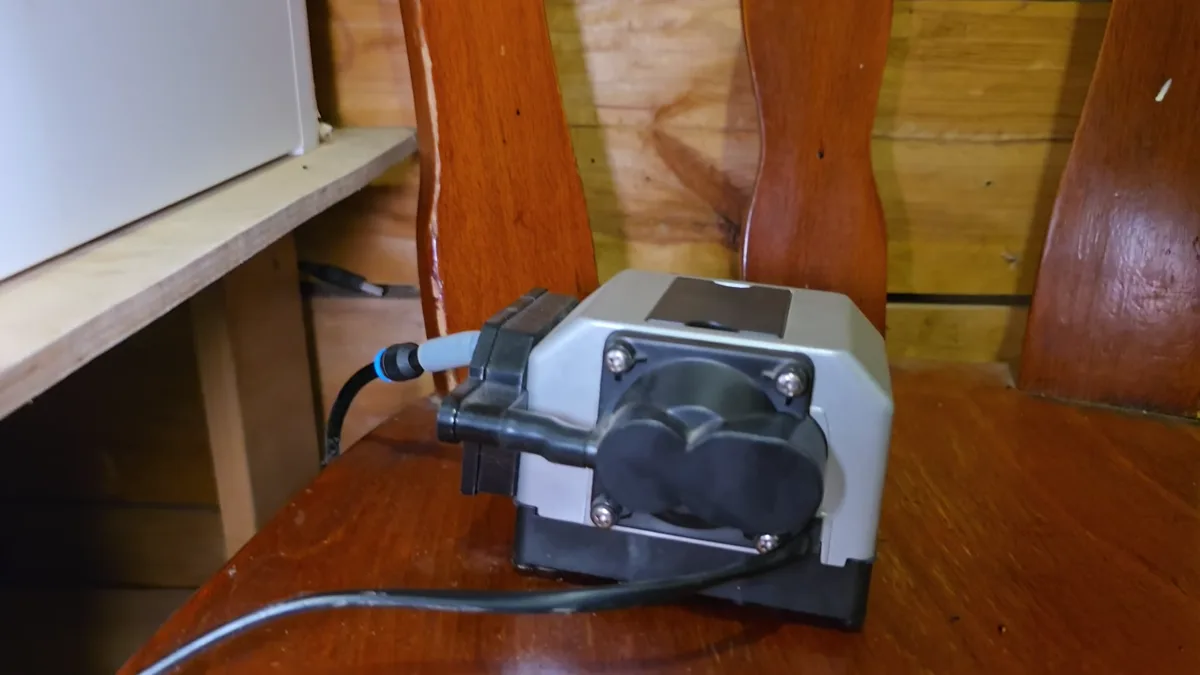
An air pump blows smoke and soot away from the cut, and it also keeps the laser head clean. A raised honeycomb grid plus an air pump solve about 50% of the problem. A more powerful and faster laser cuts cleaner, and a CO₂ laser should cut cleaner still, but those are expensive and I do not have one.
4. Masking tape: only on top
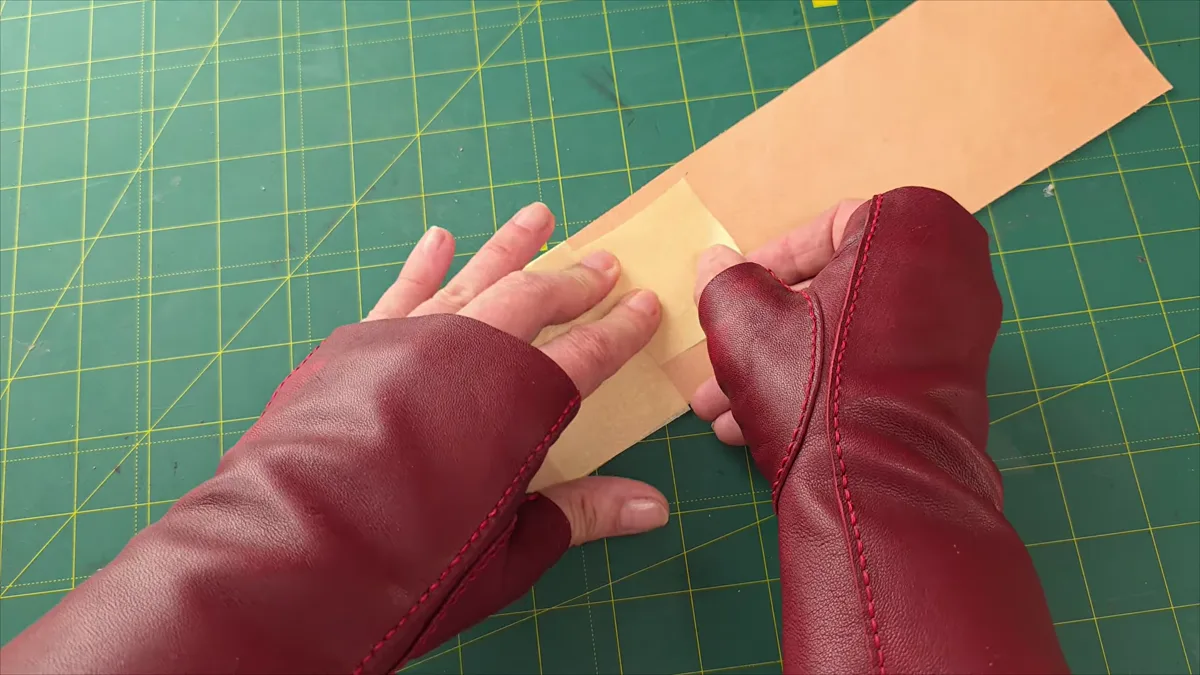
Masking tape is one of the most common tips, so I tried it on top, on both sides and underneath.
| Tape on top | Clean cut. |
|---|---|
| Tape on both sides | Scorched. |
| Tape underneath | Worse than cutting on a solid surface. |
Masking tape underneath is a bad idea.
5. Water: dampen lightly, never soak
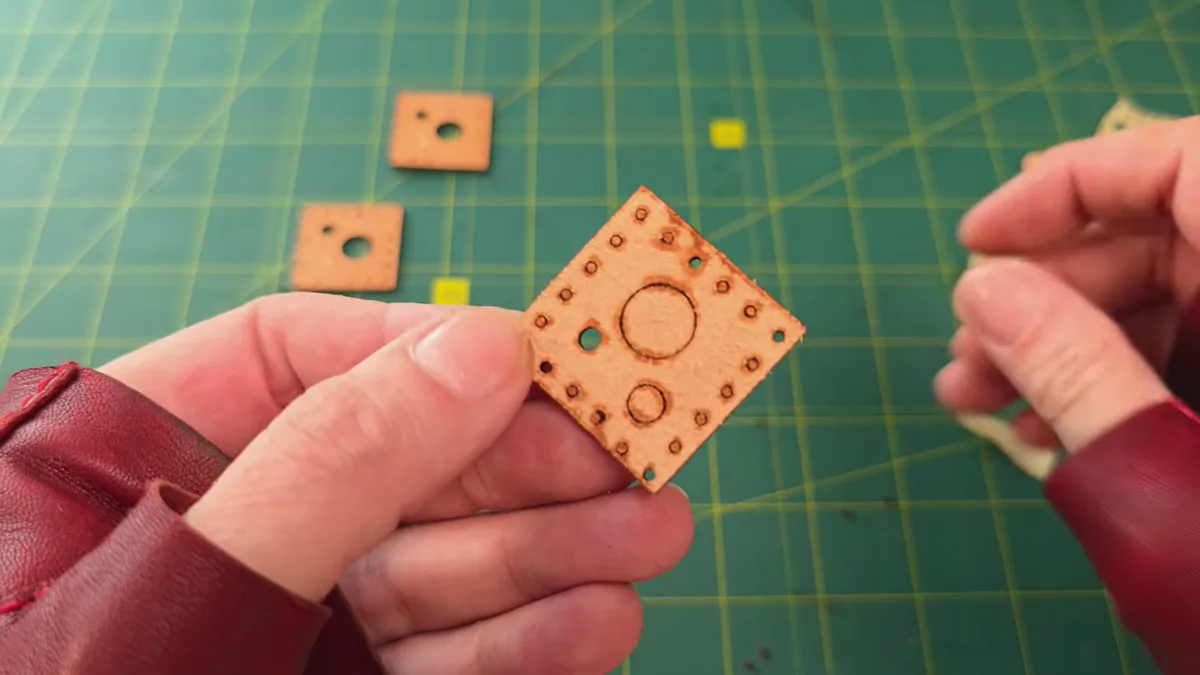
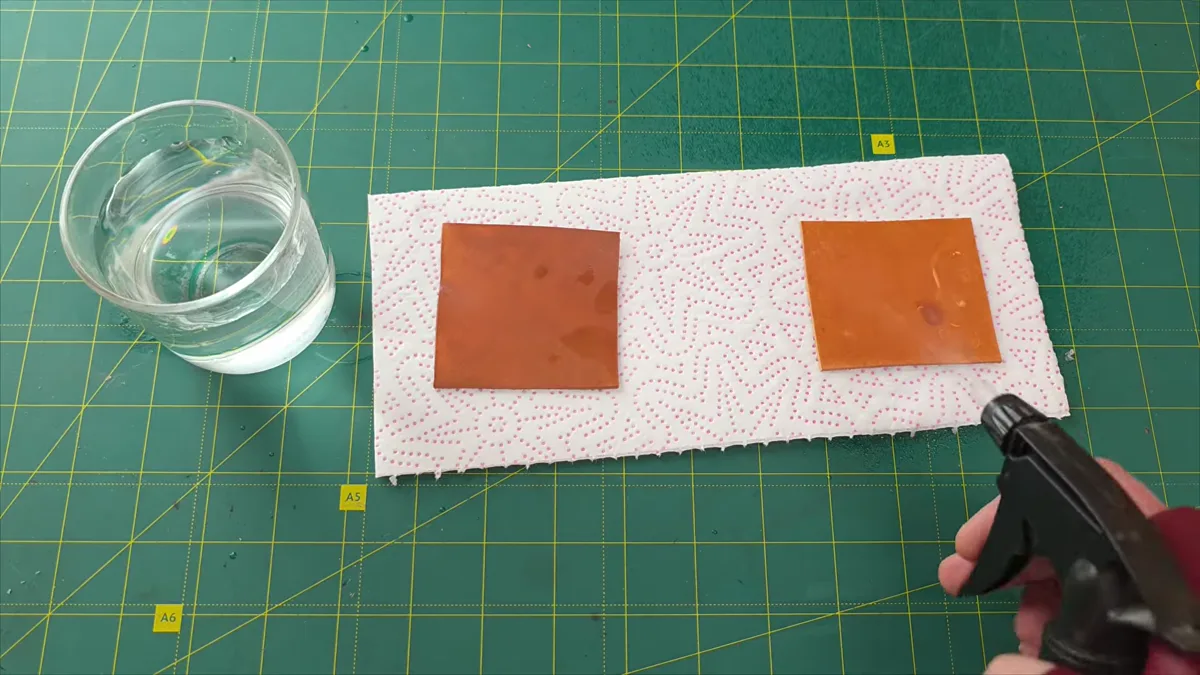
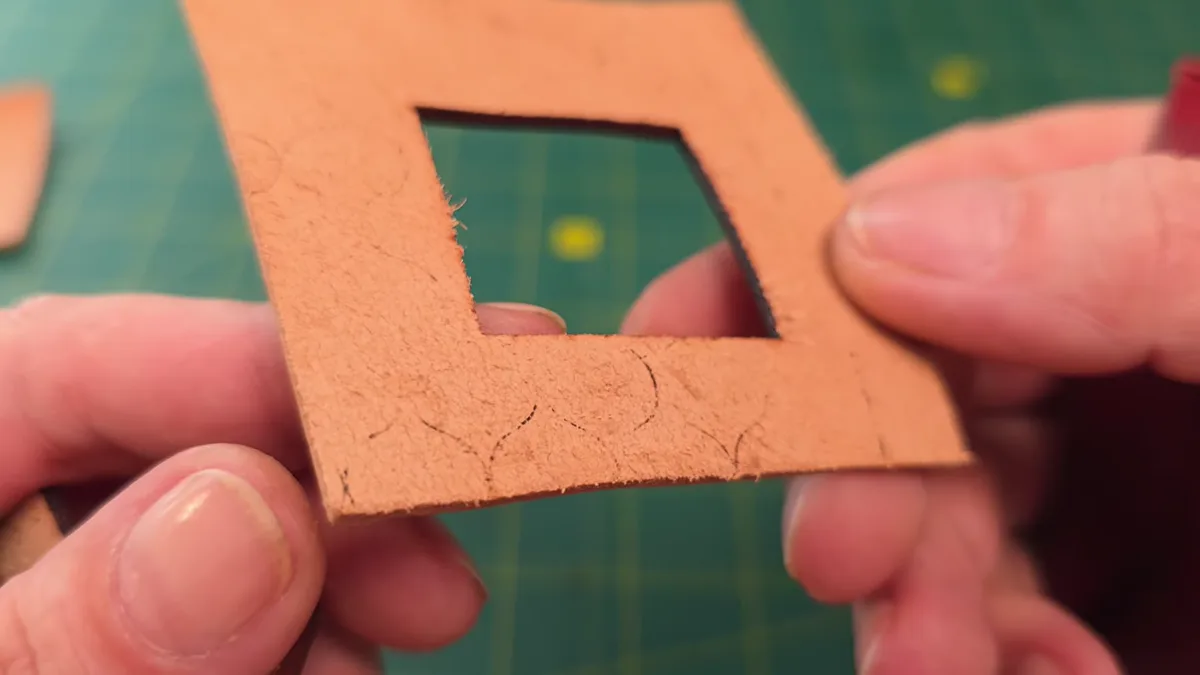
I dipped one piece in water for a second and lightly dampened the other one on the top side only. The lightly dampened leather cut very well. The dipped piece did not cut through, got scorched and even picked up marks from the honeycomb grid.
The three winners
Tape on top, lightly dampened leather and plain untreated leather on a raised grid looked almost the same. Untreated leather even looked a little better. But I liked light dampening most: the cut is the same and the smell is clearly weaker.
The smell of laser-cut leather
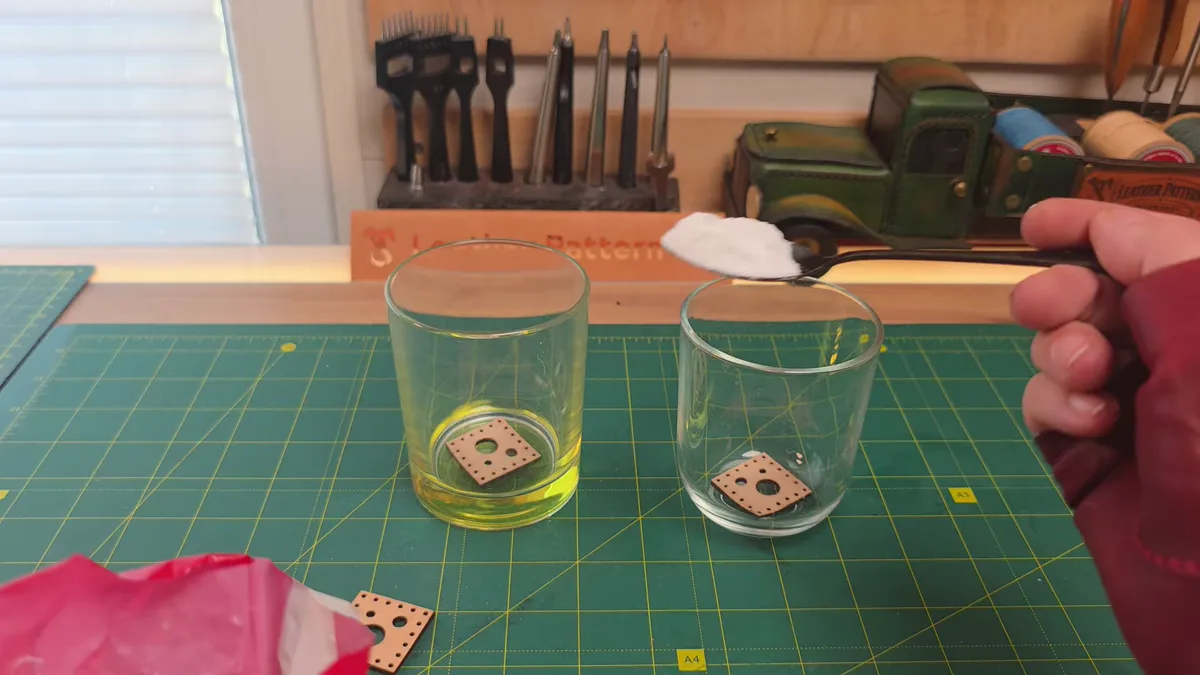
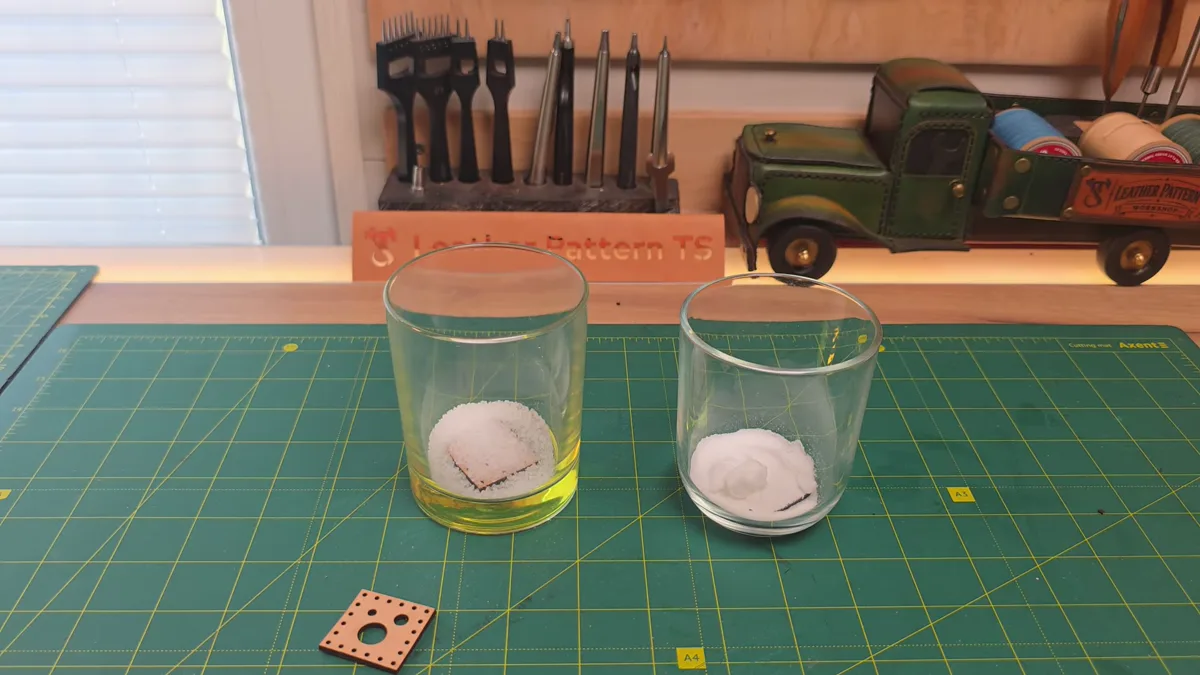
I tried the internet tips: I buried the pieces in baking soda, in salt, and left them outside in the fresh air. Nothing helped. The smell comes from the burnt edges, and it stays until you remove the soot.
How to clean the edges
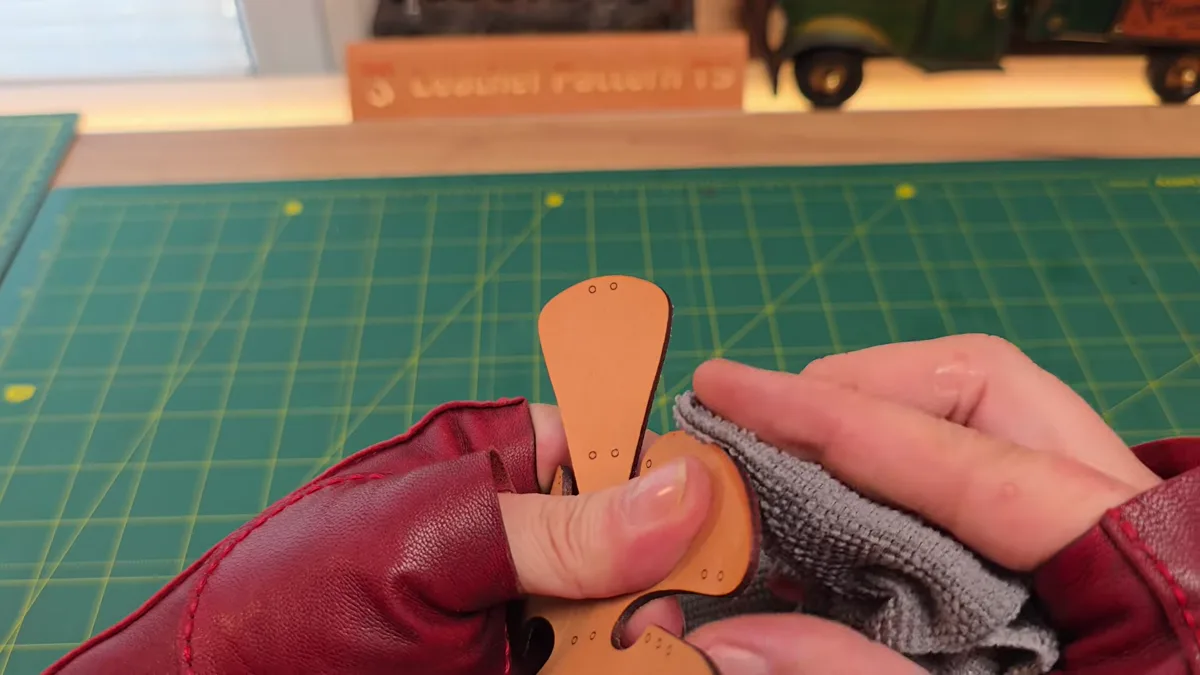
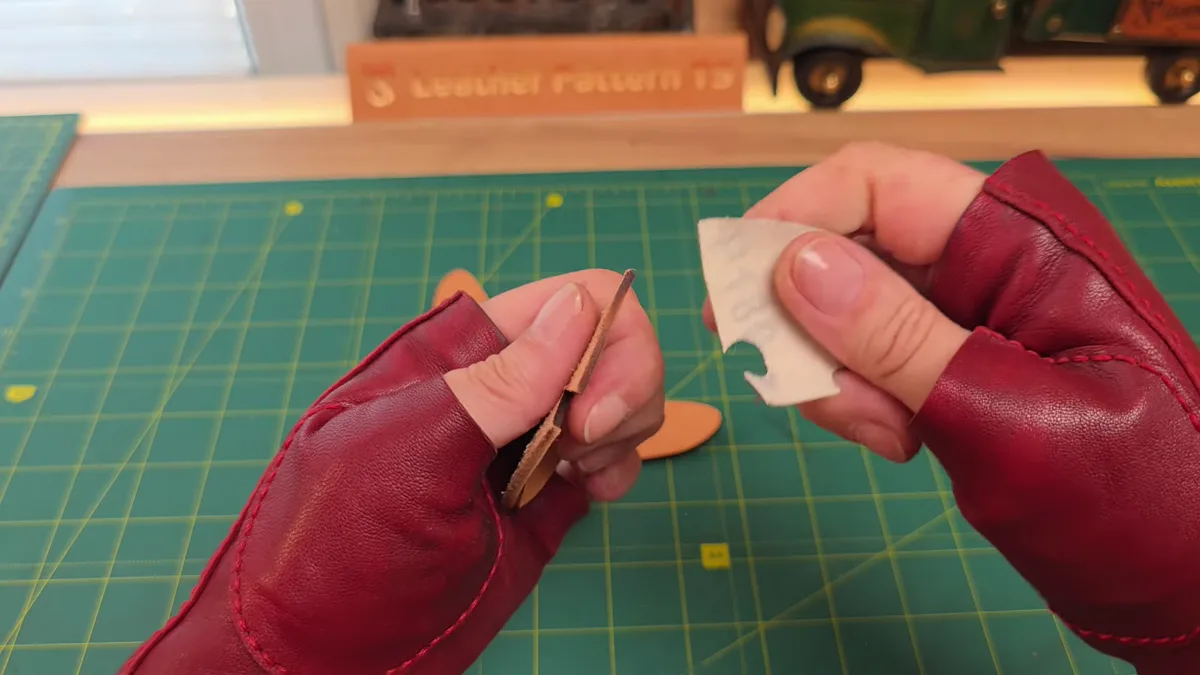
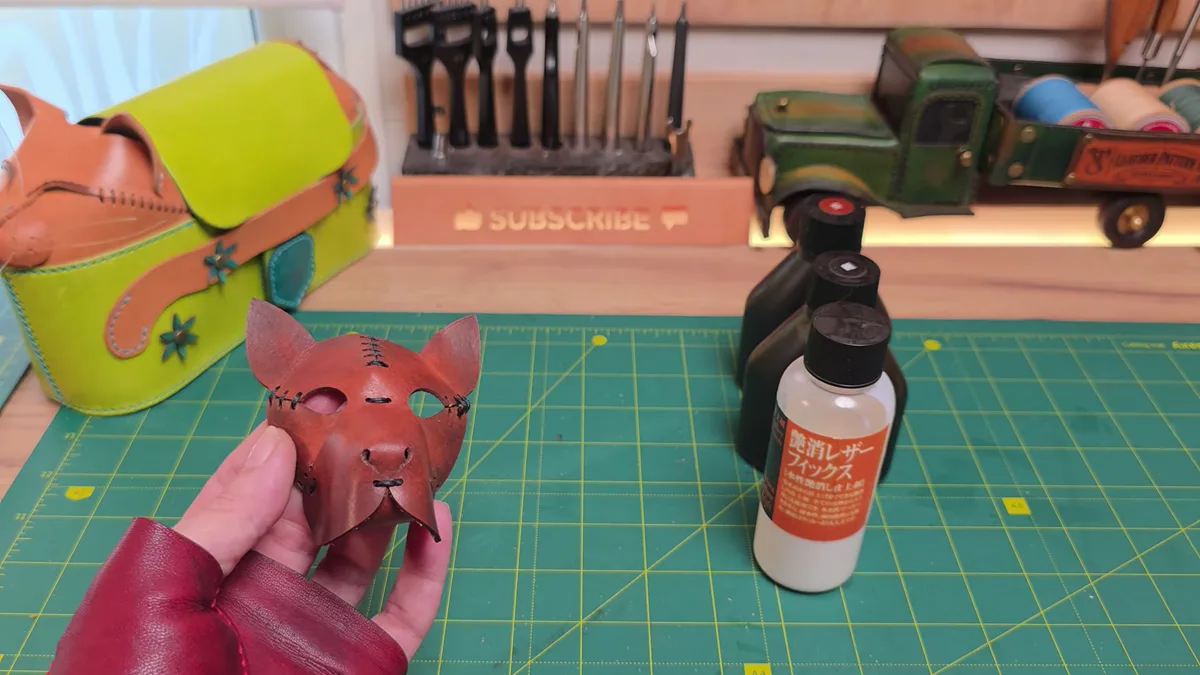
Wipe the outer edge with a damp cloth or go over it with fine-grit sandpaper. The smoke smell usually fades in a few hours. If you dye the leather, after dye, finish and Tokonole there is no smell left at all.
Stitching holes and light thread
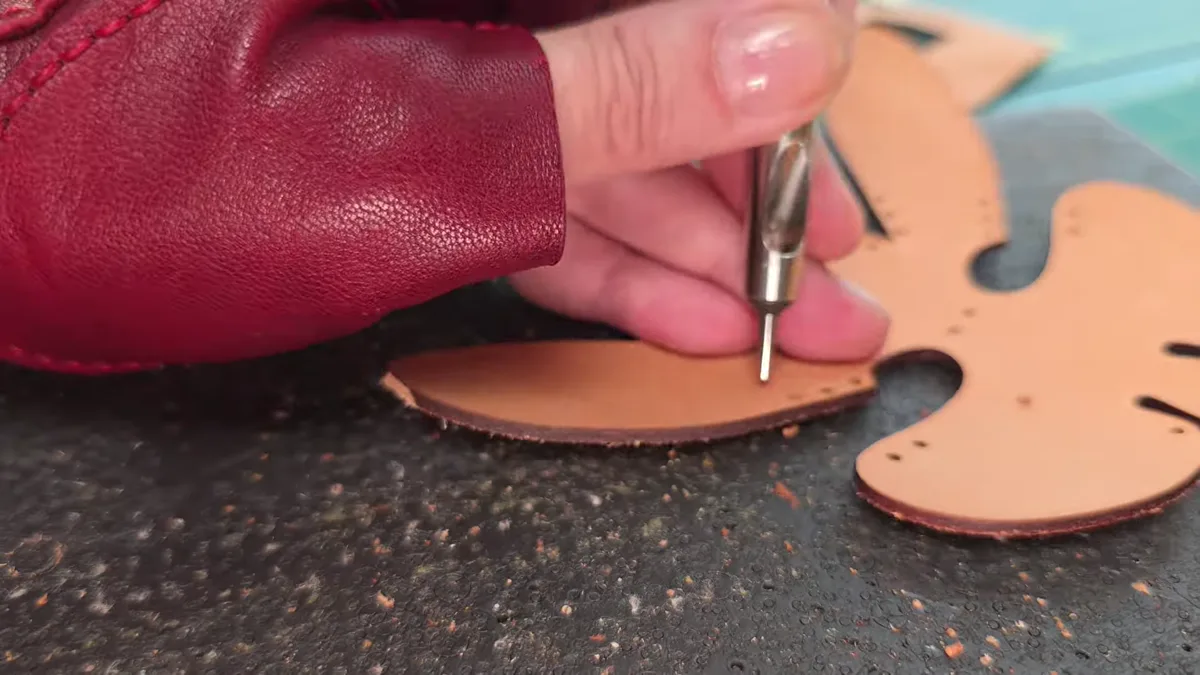
You cannot clean inside the stitching holes. So when I do not plan to dye the leather, I do not cut the holes with the laser. I engrave them and punch them by hand, and light thread stays clean. Sometimes I mix methods: some parts are laser-cut, others are made fully by hand.
Summary
- A raised honeycomb grid and a laser air pump reduce scorching.
- Light dampening of the top side reduces the smell.
- Masking tape helps only on top.
- Baking soda, salt and fresh air do nothing.
A laser engraver is a great workshop tool when you remember that it helps handwork and does not replace it.
Laser-ready leather patterns
Most of my patterns include SVG and DXF files for laser cutting together with the printable PDF. Browse all patterns or watch the video tutorials. More about lasers: my diode laser test on leather and the xTool M1 review.
For example, the free leather tote bag pattern, the steampunk leather airship pattern and the leather dog box pattern all come with laser files.
FAQ
How do I stop leather from burning when laser cutting?
Cut on a raised honeycomb grid with a laser air pump, and lightly dampen the top side of the leather.
Does masking tape prevent burn marks on leather?
On top it gives a clean cut. On both sides or underneath it made the result worse in my test.
Should I wet leather before laser cutting?
Only lightly, on the top side. Soaked leather did not cut through and got scorched.
How do I remove the burnt smell from laser-cut leather?
Remove the soot from the edges with a damp cloth or fine-grit sandpaper. Baking soda, salt and airing did not help.